Displaying items by tag: screen time
As a camp director of Swift Nature Camp an overnight summer camp in the Northwoods for over thirty years, I can tell you firsthand that the childhood loneliness epidemic isn’t just a headline—it’s something we see the moment parents drop their children off. Kids arrive more anxious, more guarded, and more attached to their phones than ever before.
But I’ve also seen the cure. When we remove the screens, the transformation that happens in just a few short weeks is nothing short of a miracle.
Here is the revised article, written directly from my perspective as a director, fully optimized with high-volume search terms and strategic links to help parents find the answer they are looking for.
Conquering the Loneliness Epidemic: Why a Screen-Free Summer is the Antidote for Modern Kids
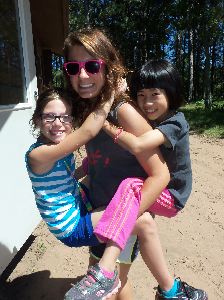 Every summer, parents walk into our office sharing the exact same worry: their children are lonelier, more anxious, and completely consumed by their screens. In my decades as a camp director, I have watched this trend accelerate into what healthcare professionals now call the modern childhood loneliness epidemic. While smartphones and social media promise constant connectivity, they are actually fueling unprecedented levels of childhood anxiety and social isolation.
Summer is a critical window for us as parents and educators to step in, hit the reset button on technology, and rethink the environments we provide for our kids. To heal the psychological toll of digital doomscrolling, children must step away from their notifications and step into the real world. That is exactly why an immersive, technology-free experience at our
The Real Impact of the Digital World on Our Kids
From a director's perspective, I see how social media has turned childhood into an emotional battlefield. The pressure to maintain curated online personas and the constant fear of missing out (FOMO) keep kids in a perpetual state of low-level stress. Instead of fostering deep relationships, algorithmic feeds increase feelings of inadequacy and alienation.
When kids spend their summer months isolated in bedrooms staring at devices, they miss out on critical developmental milestones. Face-to-face social skills, emotional resilience, and authentic peer bonds cannot be built through a glass screen. To overcome this widespread isolation, children need a dedicated sanctuary that trades digital validation for real human connection.
The Swift Nature Camp Solution: Unplugging to Reconnect
At Swift Nature Camp (SNC), we provide a vital antidote to digital exhaustion. As an intentionally small, child-centered
In our community, children discover a supportive, non-competitive environment where they are explicitly encouraged to be their true selves. Without the pressure of online celebrity culture or school-year expectations, our campers focus completely on the present moment and the peers right in front of them. This presence is one of the greatest, most enduring
Healing Through Nature, Animals, and Adventure
We combat loneliness by keeping kids actively engaged with the world around them. Our camp features a fully interactive Nature Center and an onsite Camp Zoo, where our unique animal adoption program allows campers to personally care for a live animal daily. This hands-on responsibility actively nurtures empathy, compassion, and emotional intelligence—the exact traits that digital spaces tend to erode.
In addition to wildlife education, our campers participate in dozens of land and water adventures, including canoeing, archery, and group hiking trips. Whether they are paddling across a pristine lake or laughing around an evening campfire, children learn to navigate challenges collectively. These shared outdoor triumphs build genuine social confidence, allowing first-time and returning campers alike to form deep, lasting friendships effortlessly.
Give Your Child a Fresh Start This Summer
Overcoming the childhood loneliness epidemic requires a deliberate change of scenery. This summer, give your child the gift of a fresh start away from the stress of notifications. By enrolling your child in our supportive, nature-based environment, you are providing them with the tools to return home more resilient, independent, and socially confident.
Ready to replace screen time with real-world adventure? Explore our available
Happy Trails
Lonnie
630-654-8036
www.SNC.Camp
With access to apps that instantly connect us to millions of users, much of our day is spent hunched over a screen. Adam Alter, author of ''Irresistible,'' explores the rise of technology addiction — specifically in teenagers.
The following is a transcript of the video.
Adam Alter: "Nomophobia" is a new word that's being coined to describe no mobile phobia, and it's the idea that a lot of us, in thinking about not having our phones, experience something like a phobia, and this is supposed to describe hundreds of millions of people today, and I'm sure that number is growing at the moment. What that means is that when you think about, for example, your phone falling out of your pocket, tumbling to the ground, and shattering into a million pieces, you should experience anxiety symptoms, and it's especially true among young people.
I ran a study at one point where I asked young people, a whole lot of teenagers, a very simple question. I said to them: "Imagine you have this very unpleasant choice. So, you can either watch your phone tumble to the ground and shatter into a million pieces or you can have a small bone in your hand broken." Now, that seems to people of a certain age and older like a fairly straightforward question with a straightforward answer. It seems ridiculous. Of course you choose to save the integrity of your hand and let your phone break. You can always replace a phone, but for young people this is actually a very difficult question. In my experience, about 40% to 50% of them will say, "Ultimately, I think it probably makes more sense to have a bone in my hand broken than it does to have my phone broken."
And you can understand why that is, apart from the fact that it is expensive to have a phone repaired and there's some time where you're without your phone. That is their portal to a social world that is very important to them. Being without that social world for a while is probably not as detrimental in some respects as being without a particular bone in your hand. Most of the time, you can get by and you can see this in the way they ask follow-up questions. So, a lot of these teens will say to me things like, "Is it my left hand or my right hand?" and the most important question, "Once I break that bone in my hand, can I still use my phone? Is it a bone that I need to be able to scroll on the phone, because if it is, then that's no deal, but if it's not a bone that I need to use my screen at least I can continue to use my phone during the time I'm healing." If people are willing to endure physical harm to keep their phones that obviously suggests that this is a major issue.
The definition that I like for behavioral addiction that makes the most sense to me is an experience that we return to compulsively over and over again because it feels good in a short run but in the long run, it ultimately undermines our well-being in some respect. So, it can be someone who notices that over time their social relationships are degrading because they don't have a consistent, face-to-face contact with people and that's especially problematic for kids who need time in that real face-to-face social world because that's where they develop all the competencies of being a social creature. The way to work out what other people are thinking, to share your feelings in a way that you want them to be shared for other people to understand you for you to make just the right facial expressions at just the right times. Those seem like obvious and easy-to-do things for most adults but for kids it's very difficult to do that. They take time to hone those skills and so you need face-to-face time to do that and if you don't have that, if you're spending all your time on screens because it's really fun to crush one more candy on Candy Crush or do whatever it is that you might be doing, you're not developing those long-term competencies and therefore your long-term well-being is degraded.

Testimonials
-
3 weeks was not enough, next year I want to stay for 6 weeks.
3 weeks was not enough, next year I want to stay for 6 weeks. -
I really liked the Animals in the Nature Center.
I really liked the Animals in the Nature Center. -
I like the new friends I made, we still chat on Facebook.
I like the new friends I made, we still chat on Facebook. -
In the cabin our counselors made it feel like a respectful loving family.
In the cabin our counselors made it feel like a respectful loving family. -
I cried for days after leaving my SNC family of friends.
I cried for days after leaving my SNC family of friends. -
I liked swimming every day in the lake.
I liked swimming every day in the lake. -
When I returned home I loved telling my parents about my SNC adventures.
When I returned home I loved telling my parents about my SNC adventures. -
The New Lego building is a wonderful place to be creative and make friends.
The New Lego building is a wonderful place to be creative and make friends. -
I like being out in Nature and away from the city sounds and lights.
I like being out in Nature and away from the city sounds and lights. -
The Canoe trips are the best, I always feel like an explorer.
The Canoe trips are the best, I always feel like an explorer. -
Being independant and making my own decisions was great.
Being indépendant and making my own decisions was great. -
I liked that it was non-competitive and everyone was kind.
I liked that it was non-competitive and everyone was kind. -
I was surprised how most of the kids were like me, kind, fun and liked being outside.
I was surprised how most of the kids were like me, kind, fun and liked being outside. -
I thought I would miss my electronics, but it was no problem.
I thought I would miss my electronics, but it was no problem. -
I was excited to get my Archery Achievement Award, it took dedication.
I was excited to get my Archery Achievement Award, it took dedication. -
I want to go back to SNC.
I want to go back to SNC. -
I like learning about Nature and hearing the Loons at night.
I like learning about Nature and hearing the Loons at night. -
I gained so much independence being at camp for 2 weeks.
I gained so much independence being at camp for 2 weeks. -
This is my 5th summer, I love it.
This is my 5th summer, I love it. -
I liked that all the activities were in a non-competitive atmosphere.
I liked that all the activities were in a non-competitive atmosphere. -
Their is something Magical about SNC, Friends, Activities, Nature, It's all Great.
Their is something Magical about SNC, Friends, Activities, Nature, It's all Great. -
I like making beaded animals and friendship bracelets in Arts & Crafts.
I like making beaded animals and friendship bracelets in Arts & Crafts. -
Riding horses on a trail in the woods was Awesome.
Riding horses on a trail in the woods was Awesome. -
The 1st timer camp was good cause we were all the same.
The 1st timer camp was good cause we were all the same. -
When we went hiking it was hard but the sites from the hill were breathtaking.
When we went hiking it was hard but the sites from the hill were breathtaking. -
My friend had been here and he was right... it's a blast.
My friend had been here and he was right... it's a blast. -
I'm kinda sad, this is my last summer, wish I had started younger.
I'm kinda sad, this is my last summer, wish I had started younger. -
Meeting new people from around the world is amazing.
Meeting new people from around the world is amazing. -
I liked that my counselors were friendly and encouraged me to try new things.
I liked that my counselors were friendly and encouraged me to try new things. -
SNC is about NO cliques.
SNC is about NO cliques. -
I liked daily picking the activities I wanted to do.
I liked daily picking the activities I wanted to do. -
It's the Funnest camp in the world, I got along with everyone.
It's the Funnest camp in the world, I got along with everyone. -
SNC is my home away from home.
SNC is my home away from home. -
I really enjoy meeting new kids from all over and counselors every year.
I really enjoy meeting new kids from all over and counselors every year. -
So many activities to choose from, we are never bored.
So many activities to choose from, we are never bored. -
Every year is a new adventure in camping, community and nature.
Every year is a new adventure in camping, community and nature. -
I enjoyed seeing what America was like.
I enjoyed seeing what America was like. -
Kindness and understanding is what camp is all about.
Kindness and understanding is what camp is all about. -
I loved it all... Don't' change a thing.
I loved it all... Don't' change a thing. -
I like that we got to shoot sling shots.
I like that we got to shoot sling shots. -
Camp is so much better than staying home all summer.
Camp is so much better than staying home all summer. -
It took a few years but my swimming really improved.
It took a few years but my swimming really improved. -
I feel completely included and accepted.
I feel completely included and accepted. -
It is amazing having your Birthday at camp.
It is amazing having your Birthday at camp. -
The small size makes SNC excellent.
The small size makes SNC excellent. -
I liked learning about nature and ecology.
I liked learning about nature and ecology. -
SNC is a down to earth experience without junk food or electronics.
SNC is a down to earth experience without junk food or electronics. -
I liked the shorter first timer camp & my councilors were fun and caring.
I liked the shorter first timer camp & my councilors were fun and caring. -
Living on a lake with all the water activities is wonderful.
Living on a lake with all the water activities is wonderful. -
SNC is down to earth and not a rich kids camp.
SNC is down to earth and not a rich kids camp. -
I liked SNC because it was not a sports camp.
I liked SNC because it was not a sports camp. -
Free time is the best.
Free time is the best. -
I like being away from home and out in the woods.
I like being away from home and out in the woods. -
Camp friends are the best friends.
Camp friends are the best friends. -
SNC is about trying new things, meeting new people and being on my own.
SNC is about trying new things, meeting new people and being on my own. -
Counselors were great.
Counselors were great. -
I really like the Arts & Crafts Castle.
I really like the Arts & Crafts Castle. -
This was my best summer ever.
This was my best summer ever. -
I gained confidence trying new activities and meeting new folks.
I gained confidence trying new activities and meeting new folks. -
This is my 5th summer, I love it.
This is my 5th summer, I love it. -
I feel accepted and loved at SNC.
I feel accepted and loved at SNC. -
Tubing was the most Fun.
Tubing was the most Fun. -
I feel like I belong to something bigger than me, a community.
I feel like I belong to something bigger than me, a community. -
Friends is what brings me back to SNC.
Friends is what brings me back to SNC. -
I really look forward to Pizza Night.
I really look forward to Pizza Night. -
Swift is a good fit for me, I love nature and being outside.
Swift is a good fit for me, I love nature and being outside. -
I got to shoot a real gun.
I got to shoot a real gun. -
My counselors were very encouraging when i was unsure of new activities.
My counselors were very encouraging when i was unsure of new activities. -
Making new friends is easy at Swift.
Making new friends is easy at Swift. -
Counselors made sure I felt included in the cabin.
Counselors made sure I felt included in the cabin. -
I liked coming to SNC with my sister.
I liked coming to SNC with my sister. -
Sleep in Sundays are one of my favorite days at camp.
Sleep in Sundays are one of my favorite days at camp. -
I got to bring my pet from home to SNC.
I got to bring my pet from home to SNC.


- Arts Camp (3)
- Best summer camps (35)
- Camp Counselors (16)
- Campers R Talkin' (6)
- Canoe Camp (7)
- Children's Summer Camp (98)
- Coed Summer Camp (2)
- Eco Friendly Summer Camp (8)
- Environmental Camp (37)
- Girls Summer Camp (5)
- Green summer camps (2)
- Hiking Camp (4)
- Horse Camp (1)
- Kid's Camp (36)
- Minnesota Camp (19)
- Movies (2)
- Nature Camp (57)
- Old Fashioned Summer Camps (12)
- Outdoor Youth Camp (33)
- Playing Outside (13)
- Riflery Camp (3)
- Science Camp (41)
- Science Summer Camp (20)
- Shooting Camp (1)
- SNC REVIEWS (1)
- Sports Camp (4)
- Summer Camp (72)
- Summer Camp Advice (47)
- Summer Camp Discounts (5)
- Summer Camp Savings (10)
- Summer jobs (21)
- Summer Youth Camp (25)
- Swimming Camp (3)
- Teen Camp (12)
- Traditional Summer Camps (11)
- Travel Camp (3)
- Wisconsin Camp (20)
- Parents (88)
- More Camp Information (1)
- Camp News (44)