Displaying items by tag: parents talk about camp
🏕️ Beginner Friendly Summer Camp for Kids: Is My Child Ready for Overnight Camp?
Hi, I’m Lonnie, co-director of Swift Nature Camp, and I’ve spent more than 30 years helping children successfully take their first step into overnight camp.
If you’re reading this, you’re probably asking the same questions I hear from parents every year: Is my child ready for overnight camp? What happens if they get homesick? And is there a beginner-friendly summer camp that actually supports first-time campers?
Those questions are exactly why we created Discovery Camp.
🌲 A Story from Camp
I remember a boy on his first night at camp who sat quietly on his bunk holding his backpack like it was a lifeline. He didn’t say much at drop-off, but you could see the uncertainty in his face. That evening, he asked when it would be time to go home. Nothing was wrong. He was simply adjusting. At Swift Nature Camp, we see this moment often, and we treat it as part of the process—not a problem to fix or a reason to leave early. By midweek, that same camper was laughing with new friends during a lake activity. By the end of the week, he didn’t want to leave. That change doesn’t happen by accident. It happens because our culture is designed for it.
🧠 Is My Child Ready for Overnight Camp?
After 30 years, I can say this clearly: readiness is not about confidence. It is about support. Most children do not need to feel fully ready before they come to camp. Nervousness is normal, especially for a first experience away from home. A child is usually ready if they can handle short separations, try new experiences, and show curiosity about making friends or participating in activities. But even if those skills are still developing, the right camp environment can make all the difference. That is where Discovery Camp comes in because it is exclusively for 1st time campers
🏕️ Discovery Camp: Our First-Time Camper Experience
Discovery Camp is our exclusive program designed specifically for first-time campers ages 6–12. It is not a general summer session—it is a structured introduction to overnight camp built around helping beginners succeed. Because every camper is new, there is no comparison, no pressure from experienced campers, and no expectation that children already “know how camp works.” Everyone is learning together. We intentionally keep the environment small and supportive so each child is known personally by counselors. The daily rhythm is structured, active, and predictable, which helps children settle in and build confidence naturally over time. Most importantly, we support emotional adjustment as part of the experience—not something to avoid or rush.
😟 What Happens If My Child Gets Homesick?
Homesickness is one of the most common concerns parents have, and it is also one of the most misunderstood parts of camp life.
Homesickness is normal. It is expected. And it is part of learning independence.
It often shows up as missing home routines, feeling emotional at night, or wanting reassurance. But it does not mean a child is not ready for camp, and it does not mean they cannot succeed.
What matters most is how it is handled in the moment.
🌿 How Swift Nature Camp Supports First-Time Campers
At Swift Nature Camp, we designed Discovery Camp specifically as a 1 week camp only for first time campes Our goal is helping children move through this transition successfully.
Counselors are trained to recognize early signs of homesickness and respond with calm support rather than urgency. Children are guided through feelings instead of being removed from them too quickly.
Each day is structured to keep campers engaged through activities, friendships, and movement, which naturally helps them settle into camp life. As they experience small successes throughout the week, their confidence builds step by step.
The goal is not simply for a child to “stay at camp.” The goal is for them to leave feeling capable, proud, and more independent than when they arrived.
❤️ Final Thoughts
After three decades of working with first-time campers, I’ve learned that the question is rarely whether a child can do camp. It is whether they are in an environment that helps them succeed while they are learning.
If your child is nervous, that is not a red flag. It is often the beginning of growth. Discovery Camp exists for that exact moment. And when it works, the change in a child is something parents never forget.
Please give me a call and we can talk bore about our beginner overnight camp and your child. I know we can give you child a successful 1st time camp.
Lonnie
www.SNC.Camp
630-654-8036
👨👩👧 Helpful Hints for Parents (Q&A Section)
🧠 What should I do if my child is nervous about camp?
Nervousness is completely normal, especially for first-time campers. The best approach is to stay positive, avoid over-reassurance, and focus on excitement rather than worry. Children often take emotional cues from parents, so confidence from you helps them adjust faster once they arrive.
🎒 What should I pack for a first-time sleepaway camp?
Keep packing simple and familiar. Include comfortable clothes, a flashlight, sunscreen, and any comfort item your child is used to at night. Avoid overpacking, as too many choices can actually increase anxiety for younger campers.
📞 Should I call my child if they are homesick?
Most children adjust better when they are encouraged to stay engaged in camp activities. Frequent early calls can sometimes make adjustment harder. At supportive camps like Swift Nature Camp, staff help children work through homesickness directly, so parents are not carrying that emotional pressure alone.
🌱 How do I know if my child is ready for overnight camp?
If your child can spend short periods away from home, shows curiosity about new experiences, and can participate in group activities, they are likely ready. However, even nervous children can succeed when placed in a structured, supportive environment like Discovery Camp.
❤️ What is the most important thing parents can do before camp?
Stay calm and confident. Children often mirror parent emotions. When parents show trust in the camp experience, children are far more likely to settle in quickly and have a positive first experience.
{ "@context": "https://schema.org", "@type": "FAQPage", "mainEntity": [ { "@type": "Question", "name": "Is my child ready for overnight camp?", "acceptedAnswer": { "@type": "Answer", "text": "Most children are ready for overnight camp even if they feel nervous. Readiness is less about confidence and more about having a supportive environment where they can adjust, try new experiences, and build independence over time." } }, { "@type": "Question", "name": "What happens if my child gets homesick at summer camp?", "acceptedAnswer": { "@type": "Answer", "text": "Homesickness is normal and expected, especially for first-time campers. At Swift Nature Camp, trained counselors provide emotional support, structured activities, and guidance to help children work through homesickness in a healthy and positive way." } }, { "@type": "Question", "name": "What is a 1 week sleep-away camp experience like?", "acceptedAnswer": { "@type": "Answer", "text": "A 1 week sleep-away camp gives children enough time to adjust, make friends, and build confidence while keeping the experience manageable for first-time campers. It includes structured activities, outdoor adventures, and supportive guidance from trained staff." } }, { "@type": "Question", "name": "What makes Swift Nature Camp good for first-time campers?", "acceptedAnswer": { "@type": "Answer", "text": "Swift Nature Camp's Discovery Camp is designed exclusively for first-time campers with small groups, experienced counselors, structured routines, and emotional support systems that help children succeed in their first overnight camp experience." } }, { "@type": "Question", "name": "How can parents help prepare a child for overnight camp?", "acceptedAnswer": { "@type": "Answer", "text": "Parents can help by staying positive, encouraging independence before camp, packing familiar items, and avoiding over-reassurance. A calm and confident attitude from parents helps children adjust more easily to camp life." } } ] }
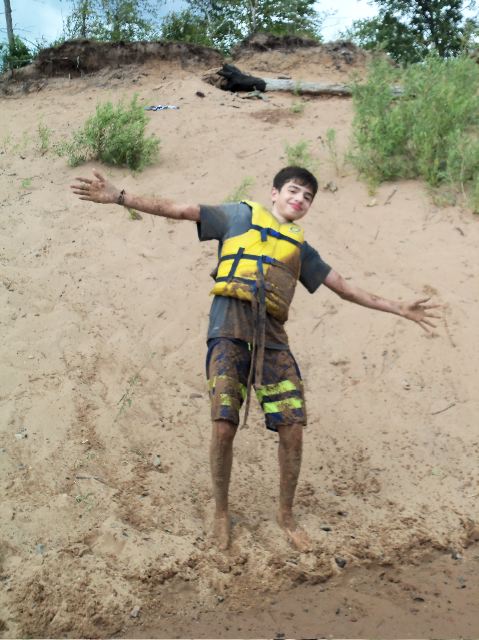 As the camp director of Swift Nature Camp, I'm familiar with homesickness in campers. I often see this as the buses pulled up to take the kids away to overnight camp, I couldn't help but notice the mix of emotions on display. The younger children seemed apprehensive about being separated from their parents, pets, and electronic devices, while the older generation appeared to be experiencing a mixture of love and anxiety. Yet new to me, is the increased feeling of "kidsickness" that many parents experience when their children go away to camp. The pandemic is one of the reasons these feelings have become so intense. We parents got used to our kids being with us 24/7.
Yet, there are parents who managed to keep their emotions in check and do not try to stow away on the bus. Sending kids away to camp can be difficult, but it's worth it when you see the transformation that takes place. Kids grow the most when they're asleep, and the same is true at camp. They are transported to a different realm, and a change in expectations helps them mature quickly. Eventhough, I own Swift Nature Camp, I am also a parent and I have seen the power of camp in 1000 of kids, so much so, that our child went to a different camp, because no kids want their parent to be the camp director.
We parents at home tend to intervene when our kids encounter problems. But at camp, they become more resourceful because no one else is going to make their bed or solve their problems. This independence helps them develop new habits and skills that they can apply in their daily lives. They also become more resilient when they experience low moments and are forced to work through them on their own.
Camp also offers kids a chance to re-invent themselves. Children who were unpopular or bullied at school get a fresh start at camp and can make friends and find new self-esteem. This experience can be life-changing, and some kids even go on to work at camps as adults, eager to give back what they received as campers.
While camp cannot solve all emotional issues, it can be a valuable solution for most. With the prevalence of mental health problems increasing in today's world, camp offers a secure and encouraging space for children to develop self-assurance and acquire essential life skills. As a result, upon their return, both younger and older campers may experience a mix of happiness and nostalgia, or "campsickness."
Parents, I know you are anxious, it will be OK. You can anticipate a reduction in your own "kidsickness" when you witness your camper's joy in their accomplishments and learn to enjoy your newfound free time. You may even look forward to the next summer with eagerness. To learn more about Sleep-away Summer Camp
Recently, we came accross the below article in the Washington Post. We found it extremely informative because it highlights the what and the why parents send their children to overnight summer camp. Something we have been wondering for years, because doing so as a parent is counter intuitive. You send your children into the woods to live with a bunch of folks they do not know while your children are directly supervised by college students, it makes no sense. Yet, after one summer parents get it. They see the benefits, children mature and gain independent in ways that can only happen away from home. If you are new to summer camp or a returning parent please read and think how camp this summer, camp will have a positive effect your child.
I send my kids to sleep-away camp to give them a competitive advantage in life
By Laura Clydesdale
May 9, 2016
“Do you even like your children?” the woman I had just met asked me.
The audacity of the question took my breath away. I had been chatting with her, explaining that my kids go to sleep-away camp for two months every year.
I quickly realized two things at once: She was obnoxious, and she actually didn’t care if I missed my kids during the summer. She was talking about something else.
I didn’t have to tell her the reason I “send them away” for most of the summer is because I like them. They adore camp, and it’s actually harder on me than it is on them. I often tell people that the first year they were both gone, it felt like I had lost an arm. I wandered around the house from room to room experiencing phantom limb pain.
Now, instead of being offended, I got excited.
I was going to be able to tell her something that my husband and I rarely get to explain: We do it because we truly think it will help our kids be successful in life. With under-employment and a stagnating labor market looming in their future, an all-around, sleep-away summer camp is one of the best competitive advantages we can give our children.
Huh?
Surely, college admissions officers aren’t going to be impressed with killer friendship bracelets or knowing all the words to the never-ending camp song “Charlie on the M.T.A.” Who cares if they can pitch a tent or build a fire?
Indeed, every summer my kids “miss out” on the specialized, résumé-building summers that their peers have. Their friends go to one-sport summer camps and take summer school to skip ahead in math. Older peers go to SAT/ACT prep classes. One kid worked in his dad’s business as an intern, while another enrolled in a summer program that helped him write all his college essays.
Many (this woman included) would say that I’m doing my children a serious disservice by choosing a quaint and out-of-date ideal instead. There are online “Ivy League Coaches” that might say we are making a terrible mistake.
We don’t think this is a mistake at all. It might not be something to put on the college application (unless my child eventually becomes a counselor), but that isn’t the goal for us.
Our goal is bigger.
We are consciously opting out of the things-to-put-on-the-college-application arms race, and instead betting on three huge benefits of summer camp, which we believe will give them a true competitive advantage — in life:
1. Building creativity.
2. Developing broadly as a human being.
3. Not-living-in-my-basement-as-an-adult independence.
MIT’s Erik Brynjolfsson says, in his book “The Second Machine Age,” that we have reached a pivotal moment where technology is replacing skills and people at an accelerated pace. He argues that creativity and innovation are becoming competitive advantages in the race against artificial intelligence, because creativity is something a machine has a hard time replicating.
The problem is that creativity seems so intangible.
Steve Jobs once said, “Creativity is just connecting things.” He believed that people invent when they connect the dots between the experiences they’ve had. To do this, he argued that we need to have more experiences and spend more time thinking about those experiences.
Indeed. According to Adam Grant’s book “Originals: How Non-Conformists Move the World,” researchers at Michigan State University found that to receive the Nobel Prize, you need deep study in your field and those broad experiences Jobs was talking about. They studied the winning scientists from 1901 through 2005 and compared them with typical scientists living at the same time. Grant writes that the Nobel Prize winners were:
* Two times more likely to play an instrument, compose or conduct.
* Seven times more likely to draw, paint or sculpt.
* Seven-and-a-half times more likely to do woodwork or be a mechanic, electrician or glassblower.
* Twelve times more likely to write poetry, plays, novels or short stories.
* And 22 times more likely to be an amateur actor, dancer or magician.
You read that right. Magician.
It’s not just that this kind of original thinker actively seeks out creative pursuits. These original experiences provide a new way of looking at the world, which helped the prize-winners think differently in their day jobs.
The beauty of summer camp is that not only do kids get to do all sorts of crazy new things, they also get to do it in nature, which lends its own creative boost.
Most importantly, my kids have such intensely packed schedules full of sports, music, art classes, community service and technological stimulation throughout the school year that it makes finding these all-important quiet mental spaces more difficult.
Summers provide a much-needed opportunity for my children to unplug, achieve focus and develop those creative thought processes and connections.
Okay, okay. Creativity might be a compelling tool to beat out that neighbor girl applying to the same college, but what about this “developing broadly as a human being” stuff?
I didn’t come up with that phrase. Harvard did.
William Fitzsimmons, dean of admissions at Harvard, Marilyn McGrath, director of admissions at Harvard and Charles Ducey, with Harvard’s graduate school of education, penned a compelling letter to parents. It practically begs and pleads with them to reevaluate the summer extracurriculars race and to “bring summer back,” with an “old-fashioned summer job” perhaps, or simply time to “gather strength for the school year ahead.”
Fitzsimmons writes, “What can be negative is when people lose sight of the fact that it’s important to develop broadly as a human being, as opposed to being an achievement machine. In the end, people will do much better reflecting, perhaps through some down time, in the summer.”
In terms of “developing broadly as a human being,” summer camp can provide an impressive list of life skills.
Studies over the past decade have shown outdoor programs stimulate the development of interpersonal competencies, enhance leadership skills and have positive effects on adolescents’ sense of empowerment, self-control, independence, self-understanding, assertiveness, decision-making skills, self-esteem, leadership, academics, personality and interpersonal relations.
Now for the cherry on top: Independence.
Michael Thompson, the author of “Homesick and Happy,” has written, “… there are things that, as a parent, you cannot do for your children, as much as you might wish to. You cannot make them happy (if you try too hard they become whiners); you cannot give them self-esteem and confidence (those come from their own accomplishments); you cannot pick friends for them and micro-manage their social lives, and finally you cannot give them independence. The only way children can grow into independence is to have their parents open the door and let them walk out. That’s what makes camp such a life-changing experience for children.”
So, yes, Ms. Tiger Mom, I am letting my children walk out the door and make useless lanyards for two months.
They might not have anything “constructive” to place on their college application, but they will reflect, unwind, think and laugh. They will explore, perform skits they wrote themselves and make those endless friendship bracelets to tie onto the wrists of lifelong friends.
The result will be that when they come back through our door, we’re pretty sure that, in addition to having gobs of creativity and independence, they’ll be more comfortable with who they are as people.
And just maybe they’ll even bring back a few magic tricks.
Laura Clydesdale lives in Berkeley, Calif., with her husband and children. She blogs at lauraclydesdale.com. Follow her on Twitter @l_clydesdale.
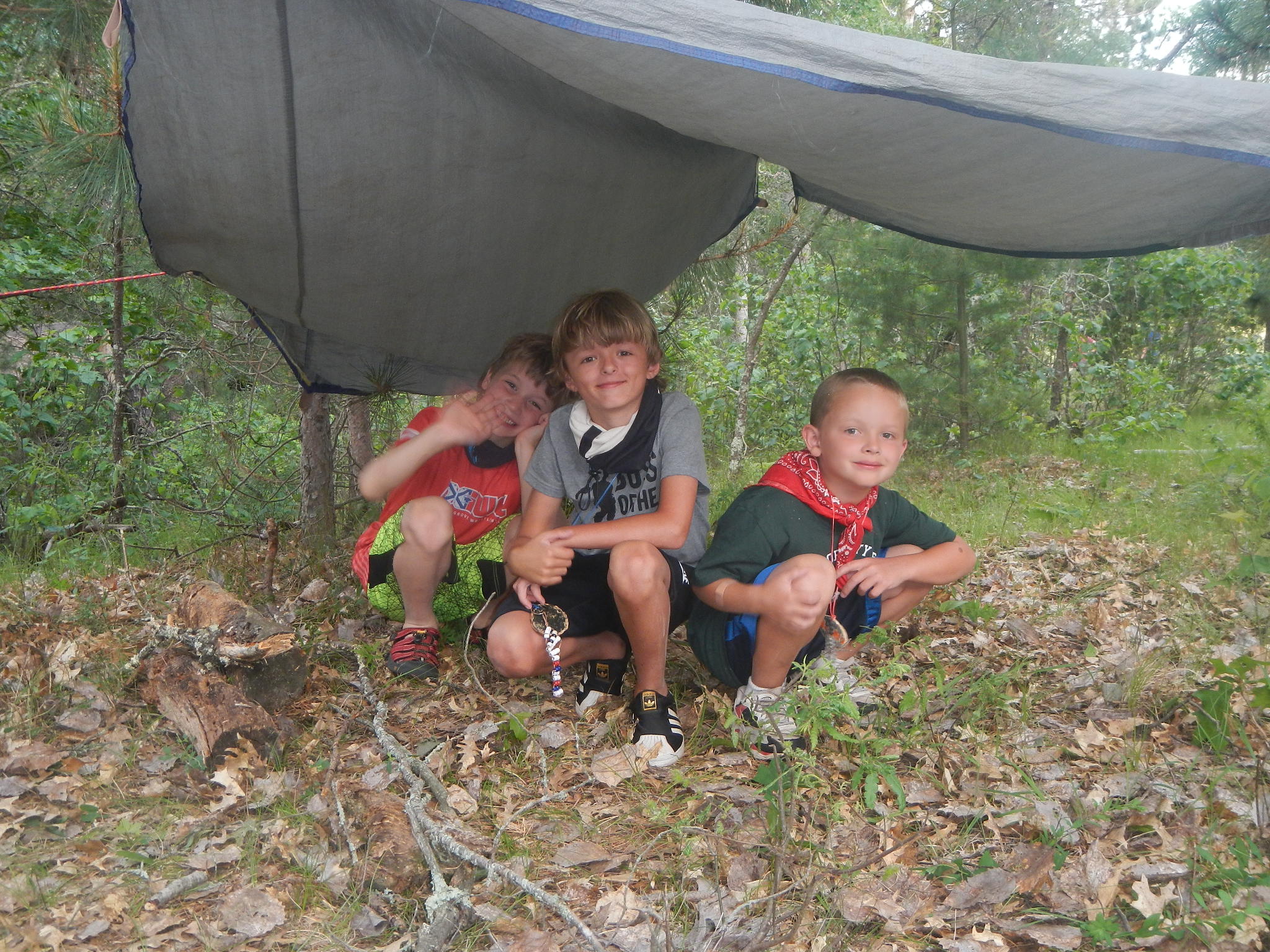
As summer camp directors we often see the "magic" of camp. Sure we know alot of hard work and dedication goes into each summer to make it a success. But something much more than fun comes out of camp, we see it every summer , Below is an article I recently found in Chicago Parent Magazine written by a Mom that see the benefits
The greatest gift my parents ever gave me was the privilege of summer camp — a tradition we’ve passed on to my children. At camp I learned to water ski, sail, canoe and horseback ride. I can make a killer lanyard key chain or beaded necklace. But these are just the things that you DO at camp. It’s what happens in between all of these activities that make camp so special.
Here are 5 things you learn at camp that stay with you for a lifetime.
Independence.
It goes without saying, but at camp you’re not only away from your parents, you’re away from electronics, from your school friends, from the conveniences of home. Yet you learn through the deepest of interpersonal skills that you are capable of figuring out just about anything on your own.
Confidence.
Camp is where you learn to laugh and dance like no one is watching. You also try things that you never would anywhere else. The camp aura gives you a boost of confidence to step out of your comfort zone. There is no judgment and the staff is there to ensure that your child comes home a stronger individual than when they left.
The importance of connection and tradition.
When you are away with the same people summer after summer, something incredible happens. You build upon your experiences with each other, often connecting back to the past and build moments that you learn to look forward to. In my adult life this has helped me form the experiences we have with our children, year after year in our own home.
Contentment with yourself.
When I think back to camp, it was where I learned to just BE. With myself, with others, with nature. Some of my most favorite memories from camp are simply hanging out on the porch, the cabin or the beach, laughing. You realize that all the STUFF just DOESN’T MATTER.
The importance of friendship.
True friendship. Camp is where you learn HOW to make friends. You learn how to resolve conflict without your parents stepping in, and after living with the same kids for four or eight weeks, you come home being able to recognize the meaning of true friendship. Giving your child a break from their everyday and the chance to make new friends on their own is a life skill you can’t get anywhere else — and one that will serve them forever.
I cry when I put my kids on the camp bus each year because I know what lies ahead on the other end of their ride. I know that the weeks spent at summer camp will be some of the best in their entire life. And also, I cry because I wish that I could go, too.
Lindsay Pinchuk is a suburban Chicago mom of two girls and an award-winning community builder and entrepreneur who is working to help small businesses thrive.
As parents we all want to be the best parents we can be. Our goal is to help develop children who are kind, considerate, independant and can do things for themselves. In short, we want our children to be thier personal best. Yet, thier is one thing that every parent MUST remember. The video is a parent skill video that will help you help your child. The steps outlined are the same steps we train our camp counselors to do in helping a child. Watch this video to learn this helpful 4 step program.
As parents we all want the best for our child. We have goals and want them to be thier best. Yet, thier is one thing that every parent MUST remember. Do you know what that is? Watch this video to learn this helpful 4 step program.
As a parent and a camp director, I often speak with parents that have their child on the fast track. Life has become all about building their child's resume, one filled with Accomplishment and Direction. When I mention I run a summer camp they are often unwilling to hear why camp is an important part of what today's children need. At Swift Nature Camp we are about people building not about building resumes. The better the kids, the better the people. We believe it is people that will change the world not resumes.
Recently the below article was in the Washington Post, maybe this is what I need to print and hand out to those parents... Tell us what you think.
I send my kids to sleep-away camp to give them a competitive advantage in life

“Do you even like your children?” the woman I had just met asked me.
The audacity of the question took my breath away. I had been chatting with her, explaining that my kids go to sleep-away camp for two months every year.
I quickly realized two things at once: She was obnoxious, and she actually didn’t care if I missed my kids during the summer. She was talking about something else.I didn’t have to tell her the reason I “send them away” for most of the summer is because I like them. They adore camp, and it’s actually harder on me than it is on them. I often tell people that the first year they were both gone, it felt like I had lost an arm. I wandered around the house from room to room experiencing phantom limb pain.
Now, instead of being offended, I got excited.
I was going to be able to tell her something that my husband and I rarely get to explain: We do it because we truly think it will help our kids be successful in life. With under-employment and a stagnating labor market looming in their future, an all-around, sleep-away summer camp is one of the best competitive advantages we can give our children.
Huh?
Surely, college admissions officers aren’t going to be impressed with killer friendship bracelets or knowing all the words to the never-ending camp song “Charlie on the M.T.A.” Who cares if they can pitch a tent or build a fire?
Indeed, every summer my kids “miss out” on the specialized, résumé-building summers that their peers have. Their friends go to one-sport summer camps and take summer school to skip ahead in math. Older peers go to SAT/ACT prep classes. One kid worked in his dad’s business as an intern, while another enrolled in a summer program that helped him write all his college essays.
Many (this woman included) would say that I’m doing my children a serious disservice by choosing a quaint and out-of-date ideal instead. There are online “Ivy League Coaches” that might say we are making a terrible mistake.
We don’t think this is a mistake at all. It might not be something to put on the college application (unless my child eventually becomes a counselor), but that isn’t the goal for us.
Our goal is bigger.
We are consciously opting out of the things-to-put-on-the-college-application arms race, and instead betting on three huge benefits of summer camp, which we believe will give them a true competitive advantage — in life:
1. Building creativity.
2. Developing broadly as a human being.
3. Not-living-in-my-basement-as-an-adult independence.
MIT’s Erik Brynjolfsson says, in his book “The Second Machine Age,” that we have reached a pivotal moment where technology is replacing skills and people at an accelerated pace. He argues that creativity and innovation are becoming competitive advantages in the race against artificial intelligence, because creativity is something a machine has a hard time replicating.
The problem is that creativity seems so intangible.
Steve Jobs once said, “Creativity is just connecting things.” He believed that people invent when they connect the dots between the experiences they’ve had. To do this, he argued that we need to have more experiences and spend more time thinking about those experiences.
Indeed. According to Adam Grant’s book “Originals: How Non-Conformists Move the World,” researchers at Michigan State University found that to receive the Nobel Prize, you need deep study in your field and those broad experiences Jobs was talking about. They studied the winning scientists from 1901 through 2005 and compared them with typical scientists living at the same time. Grant writes that the Nobel Prize winners were:
* Two times more likely to play an instrument, compose or conduct.
* Seven times more likely to draw, paint or sculpt.
* Seven-and-a-half times more likely to do woodwork or be a mechanic, electrician or glassblower.
* Twelve times more likely to write poetry, plays, novels or short stories.
* And 22 times more likely to be an amateur actor, dancer or magician.
You read that right. Magician.
It’s not just that this kind of original thinker actively seeks out creative pursuits. These original experiences provide a new way of looking at the world, which helped the prize-winners think differently in their day jobs.
The beauty of summer camp is that not only do kids get to do all sorts of crazy new things, they also get to do it in nature, which lends its own creative boost.
Most importantly, my kids have such intensely packed schedules full of sports, music, art classes, community service and technological stimulation throughout the school year that it makes finding these all-important quiet mental spaces more difficult.
Summers provide a much-needed opportunity for my children to unplug, achieve focus and develop those creative thought processes and connections.
Okay, okay. Creativity might be a compelling tool to beat out that neighbor girl applying to the same college, but what about this “developing broadly as a human being” stuff?
I didn’t come up with that phrase. Harvard did.
William Fitzsimmons, dean of admissions at Harvard, has penned a compelling letter to parents. It practically begs and pleads with them to reevaluate the summer extracurriculars race and to “bring summer back,” with an “old-fashioned summer job” perhaps, or simply time to “gather strength for the school year ahead.”
Fitzsimmons writes, “What can be negative is when people lose sight of the fact that it’s important to develop broadly as a human being, as opposed to being an achievement machine. In the end, people will do much better reflecting, perhaps through some down time, in the summer.”
In terms of “developing broadly as a human being,” summer camp can provide an impressive list of life skills.
Studies over the past decade have shown outdoor programs stimulate the development of interpersonal competencies, enhance leadership skills and have positive effects on adolescents’ sense of empowerment, self-control, independence, self-understanding, assertiveness, decision-making skills, self-esteem, leadership, academics, personality and interpersonal relations.
Now for the cherry on top: Independence.
Michael Thompson, the author of “Homesick and Happy,” has written, “… there are things that, as a parent, you cannot do for your children, as much as you might wish to. You cannot make them happy (if you try too hard they become whiners); you cannot give them self-esteem and confidence (those come from their own accomplishments); you cannot pick friends for them and micro-manage their social lives, and finally you cannot give them independence. The only way children can grow into independence is to have their parents open the door and let them walk out. That’s what makes camp such a life-changing experience for children.”
So, yes, Ms. Tiger Mom, I am letting my children walk out the door and make useless lanyards for two months.
They might not have anything “constructive” to place on their college application, but they will reflect, unwind, think and laugh. They will explore, perform skits they wrote themselves and make those endless friendship bracelets to tie onto the wrists of lifelong friends.
The result will be that when they come back through our door, we’re pretty sure that, in addition to having gobs of creativity and independence, they’ll be more comfortable with who they are as people.
And just maybe they’ll even bring back a few magic tricks.
Laura Clydesdale lives in Berkeley, Calif., with her husband and children.

- Arts Camp (3)
- Best summer camps (35)
- Camp Counselors (16)
- Campers R Talkin' (6)
- Canoe Camp (7)
- Children's Summer Camp (98)
- Coed Summer Camp (2)
- Eco Friendly Summer Camp (8)
- Environmental Camp (37)
- Girls Summer Camp (5)
- Green summer camps (2)
- Hiking Camp (4)
- Horse Camp (1)
- Kid's Camp (36)
- Minnesota Camp (19)
- Movies (2)
- Nature Camp (57)
- Old Fashioned Summer Camps (12)
- Outdoor Youth Camp (33)
- Playing Outside (13)
- Riflery Camp (3)
- Science Camp (41)
- Science Summer Camp (20)
- Shooting Camp (1)
- SNC REVIEWS (1)
- Sports Camp (4)
- Summer Camp (72)
- Summer Camp Advice (47)
- Summer Camp Discounts (5)
- Summer Camp Savings (10)
- Summer jobs (21)
- Summer Youth Camp (25)
- Swimming Camp (3)
- Teen Camp (12)
- Traditional Summer Camps (11)
- Travel Camp (3)
- Wisconsin Camp (20)
- Parents (88)
- More Camp Information (1)
- Camp News (44)