
Displaying items by tag: Homeschooling camps
Contrasting Paths of Learning in the 2024 Summer
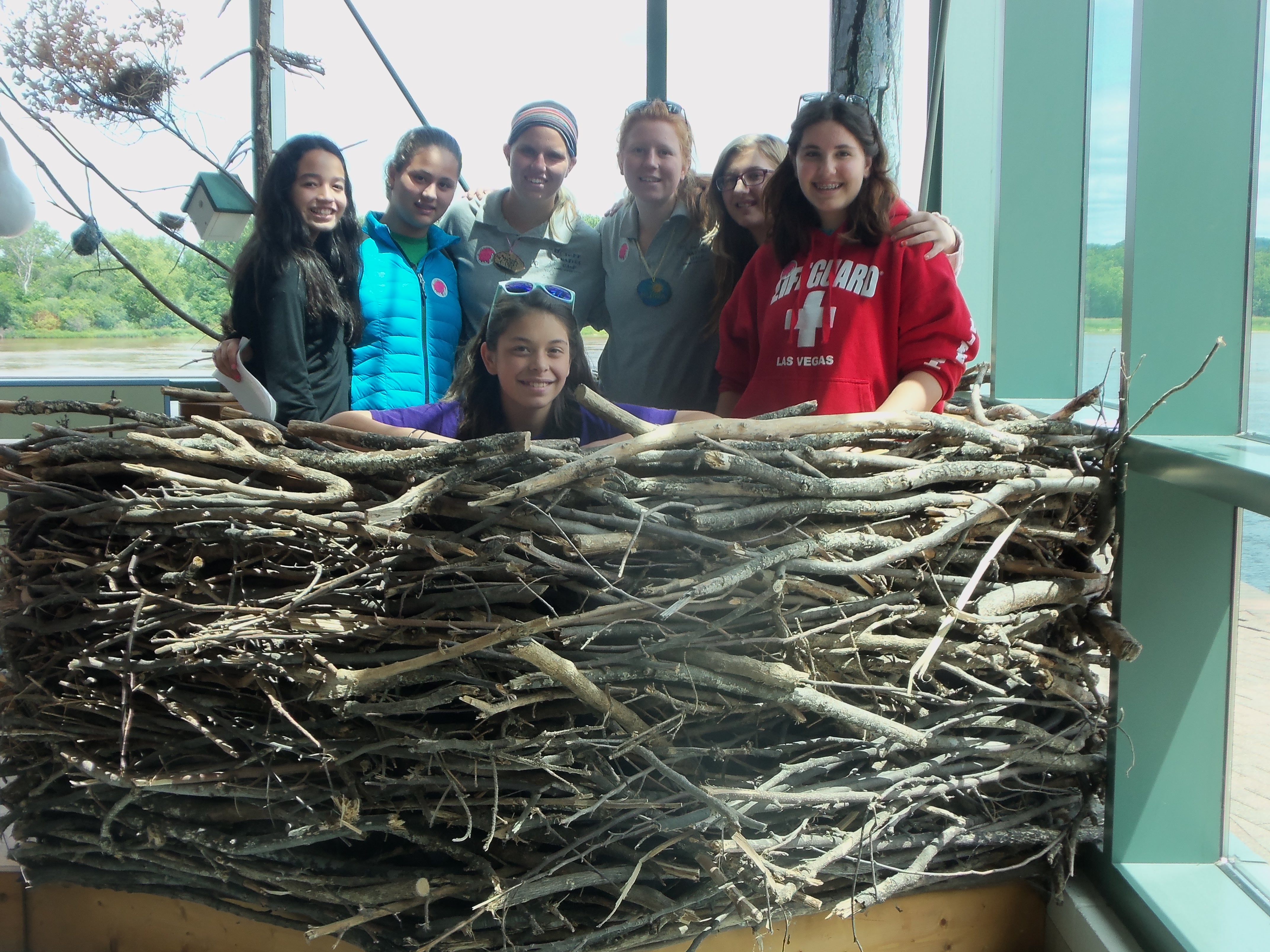 Education is a lifelong journey, and it takes various forms throughout our lives. While traditional schooling is the primary source of knowledge and skills for many, there are alternative avenues for learning that offer unique experiences and perspectives. One such alternative is the Swift Nature Camp, where in the summer of 2024, children and young adults embark on a different kind of educational adventure. In this article, we will explore the distinctions between learning in a conventional school setting and the distinctive learning that occurs at the Swift Nature Camp.
As we all know, schooling forms the foundation of education for most children and teenagers. It is structured, rigorous, and covers a wide range of subjects, from mathematics and science to language arts and history. The primary objectives of traditional schooling include academic achievement, skill development, and the acquisition of knowledge that can prepare students for future careers and personal growth.
Swift Nature Camp, on the other hand, offers a unique and experiential approach to education. Located in the heart of nature, this camp provides children and young adults with opportunities to learn outside the conventional classroom setting. Here, the emphasis is on environmental education, adventure, and personal growth.
-
Environmental Education: At Swift Nature Camp, campers learn about the natural world through hands-on experiences. They explore the great outdoors, study wildlife, engage in ecology lessons, and participate in conservation efforts. This direct interaction with nature instills a deep appreciation for the environment and encourages a sense of responsibility toward it.
-
Personal Growth: While traditional schooling focuses on academic achievement, Swift Nature Camp places a strong emphasis on personal growth and character development. Campers are encouraged to build resilience, self-confidence, and teamwork skills. They learn to overcome challenges, take on leadership roles, and develop a sense of independence.
-
Adventure and Fun: Campers at Swift Nature Camp engage in various outdoor activities such as hiking, kayaking, and camping. These activities not only teach valuable life skills but also instill a sense of adventure and a love for the outdoors.
-
Building Social Skills: Campers develop strong interpersonal skills through teamwork, cooperation, and making new friends. The camp environment fosters a sense of community and inclusion, which can have a lasting impact on a child's social development.
The distinctions between traditional school and Swift Nature Camp are evident. While school provides a structured, classroom-based education, Swift Nature Camp offers a more experiential and nature-focused approach. Each setting serves its unique purpose and offers valuable learning opportunities, but they differ in their methods and outcomes.
Learning is not limited to the walls of a classroom. The Swift Nature Camp offers an exciting 2024 overnight summer camp alternative where education is combined with adventure, personal growth, and a profound connection to nature. Both school and Swift Nature Camp have their own merits, and the choice between them depends on individual interests and goals. The summer of 2024 promises to be a time for young learners to explore their options, either within the traditional school system or through the transformative experience of Swift Nature Camp.
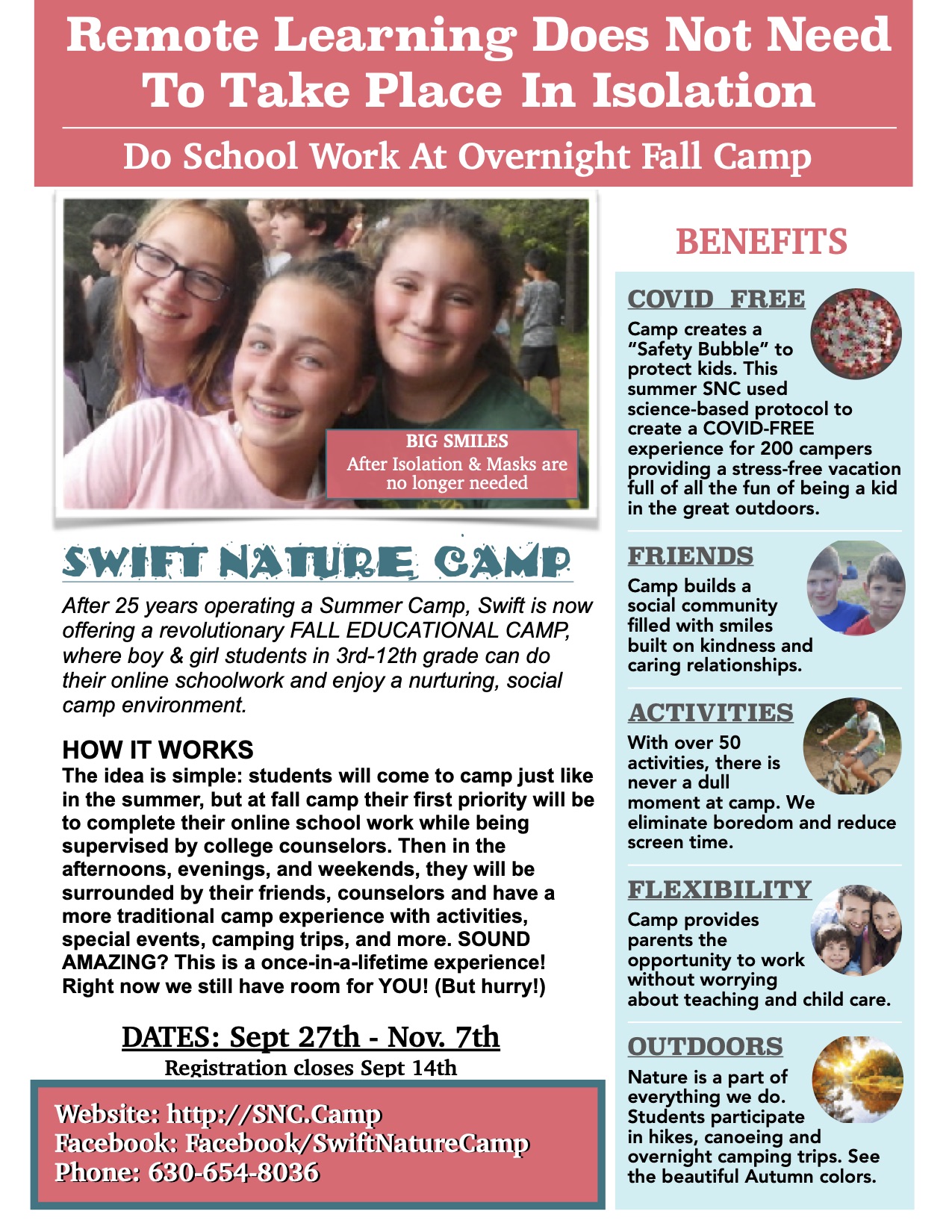
Please take this flyer and share on public buletine boards at grocerie stores, Social Media or even handed it to your school Principal. JUST DRAG TO YOUR DESKTOP
Summer school, all-year academic school, summer sports programs, and electronic media have become the elements of children’s summer activity in recent years. Children are kept occupied with indoor play activities. The playground has come indoors and .....
permalink=”http://www.swiftnaturecamp.com/blog”>
narrowed in focus. The flickering light of computer monitors and handheld game screens has replaced sunlight and fresh air.
Modern times have come to call for change in the way we prepare our children to live life in the world they will inherit. Our kids simply must find a way to reconnect with our natural environment as they grow up. The global effort to restore ecological balance will need aware participants at every level. Environmental awareness always begins with a personal sense of connection to nature.
Parents can bring back awareness of nature to a child’s experience. Summer camp has been around since for over 150 years and is still an effective way to bring back balance to a child’s life. Trained staff members of modern summer camps can guide kids back into an alliance with nature through the pure fun of camp activities. The challenges of summer camp activities are fun rather than stressful, making them even more effective for learning how we are a part of nature.
Most directors of quality modern summer camps have developed policies that encourage camper experience that reconnects the camper to nature without sacrificing the great fun and memorable friendships that are the classic benefits of summer camp. One such policy is simple and sweeping: beginning by not permitting cellular phones, BlackBerries, pagers, radios, iPods, cassette or CD players, laser pens, TVs, Game Boys or digital cameras. Children forget that life is possible without these ubiquitous accessories. Not including them in the camp experience brings children a revelation: they find out that they can actually have fun and enjoy themselves living without those things.
A camp that combines traditional camp activities such as hiking, canoe trips and horseback riding with modern ways for campers to learn about nature will succeed in instilling environmental awareness in campers. Learning is potentially much more effective because it is associated with fun and friendships.
Summer camps have added modern awareness of health and nutrition to the established means of meeting physical needs such as good hygiene, exercise, and teamwork. Modern summer camps can offer a healthy menu that still includes foods that kids enjoy. A salad bar at lunch and dinner that includes a choice of fresh vegetables and salads is an example of this. Vegetarian meals should be made available to campers who have that preference. Fresh fruit can be made available all day for snacks. Nutrition is a part of a modern summer camp’s “green” approach to total wellness that includes providing means to develop of a camper’s positive self esteem, build friendships, and promote having FUN.
When they are discussing a possible choice of a camp with a camp’s directors, parents should ask about the sustainability of that camp’s own day-to-day ecological practices. How do they conserve energy and water and recycle? What is the camp doing to take responsibility for its own environmental footprint? Learning is a combination of information and participation. If a summer camp’s practices don’t reflect their talk, campers aren't going to absorb important messages about their own relationship with nature. Summer camps are becoming aware of the effects they are having on their immediate environment. Camp directors should be looking at the big picture and showing care for the earth as well as their campers.
Modern times have come to call for change in the way we prepare our children to live life in the world they will inherit. Our kids simply must find a way to reconnect with our natural environment as they grow up. The global effort to restore ecological balance will need aware participants at every level. Environmental awareness always begins with a personal sense of connection to nature.
Parents can bring back awareness of nature to a child’s experience. Summer camp has been around since for over 150 years and is still an effective way to bring back balance to a child’s life. Trained staff members of modern summer camps can guide kids back into an alliance with nature through the pure fun of camp activities. The challenges of summer camp activities are fun rather than stressful, making them even more effective for learning how we are a part of nature.
Most directors of quality modern summer camps have developed policies that encourage camper experience that reconnects the camper to nature without sacrificing the great fun and memorable friendships that are the classic benefits of summer camp. One such policy is simple and sweeping: beginning by not permitting cellular phones, BlackBerries, pagers, radios, iPods, cassette or CD players, laser pens, TVs, Game Boys or digital cameras. Children forget that life is possible without these ubiquitous accessories. Not including them in the camp experience brings children a revelation: they find out that they can actually have fun and enjoy themselves living without those things.
A camp that combines traditional camp activities such as hiking, canoe trips and horseback riding with modern ways for campers to learn about nature will succeed in instilling environmental awareness in campers. Learning is potentially much more effective because it is associated with fun and friendships.
Summer camps have added modern awareness of health and nutrition to the established means of meeting physical needs such as good hygiene, exercise, and teamwork. Modern summer camps can offer a healthy menu that still includes foods that kids enjoy. A salad bar at lunch and dinner that includes a choice of fresh vegetables and salads is an example of this. Vegetarian meals should be made available to campers who have that preference. Fresh fruit can be made available all day for snacks. Nutrition is a part of a modern summer camp’s “green” approach to total wellness that includes providing means to develop of a camper’s positive self esteem, build friendships, and promote having FUN.
When they are discussing a possible choice of a camp with a camp’s directors, parents should ask about the sustainability of that camp’s own day-to-day ecological practices. How do they conserve energy and water and recycle? What is the camp doing to take responsibility for its own environmental footprint? Learning is a combination of information and participation. If a summer camp’s practices don’t reflect their talk, campers aren't going to absorb important messages about their own relationship with nature. Summer camps are becoming aware of the effects they are having on their immediate environment. Camp directors should be looking at the big picture and showing care for the earth as well as their campers.
As the presents of Eurasian watermilfoil increases in the Northern part of Wisconsin Methods have been researched on reducing its population. One way is biological control using an increased population of the native milfoil weevil. Researchers from the University of Minnesota reported a substantial decline in the density of Eurasian watermilfoil when the weevil population reached two insects per stem.
Swift Nature Camp was pleased in the summer of 2011 to take on this project in part supported by the local lake association and theWisconsin Department of Natural Resources. “ This is REAL hands on Science” said Emily the Director at Swift in-charge of the little critters. Our goal was to start with a local population and create an even lager population to release back into the water. During the summer we had 10 tubs of 50 gallons each. These were home to our beginning brood of weevils. Every few weeks we fed them and hoped that they were reproducing franticly....
Swift Nature Camp was pleased in the summer of 2011 to take on this project in part supported by the local lake association and theWisconsin Department of Natural Resources. “ This is REAL hands on Science” said Emily the Director at Swift in-charge of the little critters. Our goal was to start with a local population and create an even lager population to release back into the water. During the summer we had 10 tubs of 50 gallons each. These were home to our beginning brood of weevils. Every few weeks we fed them and hoped that they were reproducing franticly....
Swift Nature Camp,
Please pardon the amazing delay in getting you your weevil project results. I have some preliminary results, and will send you a copy of the complete report to be filed with the DNR when that is finished (February).
I have attached the counts from the subsamples I collected from some of the tubs during our release day. The results were below what we expected to raise, with tubs producing only 40-200 weevils each, rather than 670 each, but please do not be disappointed. The temperature records Emily kept gave me a lot of good information to look at. Your temperatures in the tanks averaged 71F, which is cooler than what we planned on (77F), probably due to the shadiness of the site. What this tells me is that your weevils' development was probably happening much slower than what we expected. My observations of the samples also found that the stems were in poor condition, possibly also an effect of the shadiness of the site.
But, hey, in spite of those unexpected problems (and the problem of having to hunt and search for milfoil stems!) we still released 1248 weevils to the lake, and that's nothing to sneeze at! So thanks again for all your hard work and being part of this pilot study. We will continue to work out the kinks in this protocol to make it truly achievable to the lake groups who need it.
Thanks!
Amy Thorstenson
Executive Director/Regional AIS Coordinator
Weevil_counts_Minong_Rearing_Tubs_Aug2011
Hi Swift Nature Camp
I asked Amy how the other groups did in their weevil rearing project for 2011. None of the three groups had great success rates. You saw her report on ours, Holcombe got their tanks too hot and Amy thinks the weevils developed faster than they could feed them, so they starved. Goose Lake ended up not collected the right species of milfoil, again causing their weevils to starve. So I guess we all learned something.
Amy is exploring the possibility of applying for another DNR research grant to fund another program in 2012.
So that begs the question. Do you want to try and raise weevils again? This means having to collect (and bundle) more EWM in 2012. EWM that we are not even sure we will have. Plus with the potential drawdown occurring sometime this year (hopefully late fall) that may have a negative impact on the weevils. If the drawdown occurs in stages beginning in September or October we would likely be fine. Plus we are planning a smaller EWM treatment this year so should be able to find EWM more easily.
We have the equipment, but do we have the desire? I would again help to support it, but would want to include some money in the new grant application to do so. Most of the money added would go to my summer technician so the costs would be much less than if I charged all my time. He could then help collect EWM, even help bundle if necessary.
Please let me know your opinions as soon as possible. No need to mess with it in the grant stuff, if there is no desire to try it again. Personally, I think we should, but I am just one in a bunch that need to make that decision.
Dave Blumer | Lake Scientist
DAVE
AS YOU KNOW SWIFT NATURE CAMP IS ALWAYS WILLING TO HELP.
PLUS, IT IS A WONDERFUL LEARNING EXPERIENCE FOR OUR CAMPERS.
Jeff Lorenz
As the presents of Eurasian watermilfoil increases in the Northern part of Wisconsin Methods have been researched on reducing its population. One way is biological control using an increased population of the native milfoil weevil. Researchers from the University of Minnesota reported a substantial decline in the density of Eurasian watermilfoil when the weevil population reached two insects per stem.
Swift Nature Camp was pleased in the summer of 2011 to take on this project in part supported by the local lake association and theWisconsin Department of Natural Resources. “ This is REAL hands on Science” said Emily the Director at Swift in-charge of the little critters. Our goal was to start with a local population and create an even lager population to release back into the water. During the summer we had 10 tubs of 50 gallons each. These were home to our beginning brood of weevils. Every few weeks we fed them and hoped that they were reproducing franticly....
Swift Nature Camp was pleased in the summer of 2011 to take on this project in part supported by the local lake association and theWisconsin Department of Natural Resources. “ This is REAL hands on Science” said Emily the Director at Swift in-charge of the little critters. Our goal was to start with a local population and create an even lager population to release back into the water. During the summer we had 10 tubs of 50 gallons each. These were home to our beginning brood of weevils. Every few weeks we fed them and hoped that they were reproducing franticly....
Swift Nature Camp,
Please pardon the amazing delay in getting you your weevil project results. I have some preliminary results, and will send you a copy of the complete report to be filed with the DNR when that is finished (February).
I have attached the counts from the subsamples I collected from some of the tubs during our release day. The results were below what we expected to raise, with tubs producing only 40-200 weevils each, rather than 670 each, but please do not be disappointed. The temperature records Emily kept gave me a lot of good information to look at. Your temperatures in the tanks averaged 71F, which is cooler than what we planned on (77F), probably due to the shadiness of the site. What this tells me is that your weevils' development was probably happening much slower than what we expected. My observations of the samples also found that the stems were in poor condition, possibly also an effect of the shadiness of the site.
But, hey, in spite of those unexpected problems (and the problem of having to hunt and search for milfoil stems!) we still released 1248 weevils to the lake, and that's nothing to sneeze at! So thanks again for all your hard work and being part of this pilot study. We will continue to work out the kinks in this protocol to make it truly achievable to the lake groups who need it.
Thanks!
Amy Thorstenson
Executive Director/Regional AIS Coordinator
Weevil_counts_Minong_Rearing_Tubs_Aug2011
Hi Swift Nature Camp
I asked Amy how the other groups did in their weevil rearing project for 2011. None of the three groups had great success rates. You saw her report on ours, Holcombe got their tanks too hot and Amy thinks the weevils developed faster than they could feed them, so they starved. Goose Lake ended up not collected the right species of milfoil, again causing their weevils to starve. So I guess we all learned something.
Amy is exploring the possibility of applying for another DNR research grant to fund another program in 2012.
So that begs the question. Do you want to try and raise weevils again? This means having to collect (and bundle) more EWM in 2012. EWM that we are not even sure we will have. Plus with the potential drawdown occurring sometime this year (hopefully late fall) that may have a negative impact on the weevils. If the drawdown occurs in stages beginning in September or October we would likely be fine. Plus we are planning a smaller EWM treatment this year so should be able to find EWM more easily.
We have the equipment, but do we have the desire? I would again help to support it, but would want to include some money in the new grant application to do so. Most of the money added would go to my summer technician so the costs would be much less than if I charged all my time. He could then help collect EWM, even help bundle if necessary.
Please let me know your opinions as soon as possible. No need to mess with it in the grant stuff, if there is no desire to try it again. Personally, I think we should, but I am just one in a bunch that need to make that decision.
Dave Blumer | Lake Scientist
DAVE
AS YOU KNOW SWIFT NATURE CAMP IS ALWAYS WILLING TO HELP.
PLUS, IT IS A WONDERFUL LEARNING EXPERIENCE FOR OUR CAMPERS.
Jeff Lorenz
Summer school, all-year academic school, summer sports programs, and electronic media have become the elements of children’s summer activity in recent years. Children are kept occupied with indoor play activities. The playground has come indoors and .....
permalink=”http://www.swiftnaturecamp.com/blog”>
narrowed in focus. The flickering light of computer monitors and handheld game screens has replaced sunlight and fresh air.
Modern times have come to call for change in the way we prepare our children to live life in the world they will inherit. Our kids simply must find a way to reconnect with our natural environment as they grow up. The global effort to restore ecological balance will need aware participants at every level. Environmental awareness always begins with a personal sense of connection to nature.
Parents can bring back awareness of nature to a child’s experience. Summer camp has been around since for over 150 years and is still an effective way to bring back balance to a child’s life. Trained staff members of modern summer camps can guide kids back into an alliance with nature through the pure fun of camp activities. The challenges of summer camp activities are fun rather than stressful, making them even more effective for learning how we are a part of nature.
Most directors of quality modern summer camps have developed policies that encourage camper experience that reconnects the camper to nature without sacrificing the great fun and memorable friendships that are the classic benefits of summer camp. One such policy is simple and sweeping: beginning by not permitting cellular phones, BlackBerries, pagers, radios, iPods, cassette or CD players, laser pens, TVs, Game Boys or digital cameras. Children forget that life is possible without these ubiquitous accessories. Not including them in the camp experience brings children a revelation: they find out that they can actually have fun and enjoy themselves living without those things.
A camp that combines traditional camp activities such as hiking, canoe trips and horseback riding with modern ways for campers to learn about nature will succeed in instilling environmental awareness in campers. Learning is potentially much more effective because it is associated with fun and friendships.
Summer camps have added modern awareness of health and nutrition to the established means of meeting physical needs such as good hygiene, exercise, and teamwork. Modern summer camps can offer a healthy menu that still includes foods that kids enjoy. A salad bar at lunch and dinner that includes a choice of fresh vegetables and salads is an example of this. Vegetarian meals should be made available to campers who have that preference. Fresh fruit can be made available all day for snacks. Nutrition is a part of a modern summer camp’s “green” approach to total wellness that includes providing means to develop of a camper’s positive self esteem, build friendships, and promote having FUN.
When they are discussing a possible choice of a camp with a camp’s directors, parents should ask about the sustainability of that camp’s own day-to-day ecological practices. How do they conserve energy and water and recycle? What is the camp doing to take responsibility for its own environmental footprint? Learning is a combination of information and participation. If a summer camp’s practices don’t reflect their talk, campers aren't going to absorb important messages about their own relationship with nature. Summer camps are becoming aware of the effects they are having on their immediate environment. Camp directors should be looking at the big picture and showing care for the earth as well as their campers.
Modern times have come to call for change in the way we prepare our children to live life in the world they will inherit. Our kids simply must find a way to reconnect with our natural environment as they grow up. The global effort to restore ecological balance will need aware participants at every level. Environmental awareness always begins with a personal sense of connection to nature.
Parents can bring back awareness of nature to a child’s experience. Summer camp has been around since for over 150 years and is still an effective way to bring back balance to a child’s life. Trained staff members of modern summer camps can guide kids back into an alliance with nature through the pure fun of camp activities. The challenges of summer camp activities are fun rather than stressful, making them even more effective for learning how we are a part of nature.
Most directors of quality modern summer camps have developed policies that encourage camper experience that reconnects the camper to nature without sacrificing the great fun and memorable friendships that are the classic benefits of summer camp. One such policy is simple and sweeping: beginning by not permitting cellular phones, BlackBerries, pagers, radios, iPods, cassette or CD players, laser pens, TVs, Game Boys or digital cameras. Children forget that life is possible without these ubiquitous accessories. Not including them in the camp experience brings children a revelation: they find out that they can actually have fun and enjoy themselves living without those things.
A camp that combines traditional camp activities such as hiking, canoe trips and horseback riding with modern ways for campers to learn about nature will succeed in instilling environmental awareness in campers. Learning is potentially much more effective because it is associated with fun and friendships.
Summer camps have added modern awareness of health and nutrition to the established means of meeting physical needs such as good hygiene, exercise, and teamwork. Modern summer camps can offer a healthy menu that still includes foods that kids enjoy. A salad bar at lunch and dinner that includes a choice of fresh vegetables and salads is an example of this. Vegetarian meals should be made available to campers who have that preference. Fresh fruit can be made available all day for snacks. Nutrition is a part of a modern summer camp’s “green” approach to total wellness that includes providing means to develop of a camper’s positive self esteem, build friendships, and promote having FUN.
When they are discussing a possible choice of a camp with a camp’s directors, parents should ask about the sustainability of that camp’s own day-to-day ecological practices. How do they conserve energy and water and recycle? What is the camp doing to take responsibility for its own environmental footprint? Learning is a combination of information and participation. If a summer camp’s practices don’t reflect their talk, campers aren't going to absorb important messages about their own relationship with nature. Summer camps are becoming aware of the effects they are having on their immediate environment. Camp directors should be looking at the big picture and showing care for the earth as well as their campers.
Summer school, all-year academic school, summer sports programs, and electronic media have become the elements of children’s summer activity in recent years. Children are kept occupied with indoor play activities. The playground has come indoors and .....
permalink=”http://www.swiftnaturecamp.com/blog”>
narrowed in focus. The flickering light of computer monitors and handheld game screens has replaced sunlight and fresh air.
Modern times have come to call for change in the way we prepare our children to live life in the world they will inherit. Our kids simply must find a way to reconnect with our natural environment as they grow up. The global effort to restore ecological balance will need aware participants at every level. Environmental awareness always begins with a personal sense of connection to nature.
Parents can bring back awareness of nature to a child’s experience. Summer camp has been around since for over 150 years and is still an effective way to bring back balance to a child’s life. Trained staff members of modern summer camps can guide kids back into an alliance with nature through the pure fun of camp activities. The challenges of summer camp activities are fun rather than stressful, making them even more effective for learning how we are a part of nature.
Most directors of quality modern summer camps have developed policies that encourage camper experience that reconnects the camper to nature without sacrificing the great fun and memorable friendships that are the classic benefits of summer camp. One such policy is simple and sweeping: beginning by not permitting cellular phones, BlackBerries, pagers, radios, iPods, cassette or CD players, laser pens, TVs, Game Boys or digital cameras. Children forget that life is possible without these ubiquitous accessories. Not including them in the camp experience brings children a revelation: they find out that they can actually have fun and enjoy themselves living without those things.
A camp that combines traditional camp activities such as hiking, canoe trips and horseback riding with modern ways for campers to learn about nature will succeed in instilling environmental awareness in campers. Learning is potentially much more effective because it is associated with fun and friendships.
Summer camps have added modern awareness of health and nutrition to the established means of meeting physical needs such as good hygiene, exercise, and teamwork. Modern summer camps can offer a healthy menu that still includes foods that kids enjoy. A salad bar at lunch and dinner that includes a choice of fresh vegetables and salads is an example of this. Vegetarian meals should be made available to campers who have that preference. Fresh fruit can be made available all day for snacks. Nutrition is a part of a modern summer camp’s “green” approach to total wellness that includes providing means to develop of a camper’s positive self esteem, build friendships, and promote having FUN.
When they are discussing a possible choice of a camp with a camp’s directors, parents should ask about the sustainability of that camp’s own day-to-day ecological practices. How do they conserve energy and water and recycle? What is the camp doing to take responsibility for its own environmental footprint? Learning is a combination of information and participation. If a summer camp’s practices don’t reflect their talk, campers aren't going to absorb important messages about their own relationship with nature. Summer camps are becoming aware of the effects they are having on their immediate environment. Camp directors should be looking at the big picture and showing care for the earth as well as their campers.
Modern times have come to call for change in the way we prepare our children to live life in the world they will inherit. Our kids simply must find a way to reconnect with our natural environment as they grow up. The global effort to restore ecological balance will need aware participants at every level. Environmental awareness always begins with a personal sense of connection to nature.
Parents can bring back awareness of nature to a child’s experience. Summer camp has been around since for over 150 years and is still an effective way to bring back balance to a child’s life. Trained staff members of modern summer camps can guide kids back into an alliance with nature through the pure fun of camp activities. The challenges of summer camp activities are fun rather than stressful, making them even more effective for learning how we are a part of nature.
Most directors of quality modern summer camps have developed policies that encourage camper experience that reconnects the camper to nature without sacrificing the great fun and memorable friendships that are the classic benefits of summer camp. One such policy is simple and sweeping: beginning by not permitting cellular phones, BlackBerries, pagers, radios, iPods, cassette or CD players, laser pens, TVs, Game Boys or digital cameras. Children forget that life is possible without these ubiquitous accessories. Not including them in the camp experience brings children a revelation: they find out that they can actually have fun and enjoy themselves living without those things.
A camp that combines traditional camp activities such as hiking, canoe trips and horseback riding with modern ways for campers to learn about nature will succeed in instilling environmental awareness in campers. Learning is potentially much more effective because it is associated with fun and friendships.
Summer camps have added modern awareness of health and nutrition to the established means of meeting physical needs such as good hygiene, exercise, and teamwork. Modern summer camps can offer a healthy menu that still includes foods that kids enjoy. A salad bar at lunch and dinner that includes a choice of fresh vegetables and salads is an example of this. Vegetarian meals should be made available to campers who have that preference. Fresh fruit can be made available all day for snacks. Nutrition is a part of a modern summer camp’s “green” approach to total wellness that includes providing means to develop of a camper’s positive self esteem, build friendships, and promote having FUN.
When they are discussing a possible choice of a camp with a camp’s directors, parents should ask about the sustainability of that camp’s own day-to-day ecological practices. How do they conserve energy and water and recycle? What is the camp doing to take responsibility for its own environmental footprint? Learning is a combination of information and participation. If a summer camp’s practices don’t reflect their talk, campers aren't going to absorb important messages about their own relationship with nature. Summer camps are becoming aware of the effects they are having on their immediate environment. Camp directors should be looking at the big picture and showing care for the earth as well as their campers.
As the presents of Eurasian watermilfoil increases in the Northern part of Wisconsin Methods have been researched on reducing its population. One way is biological control using an increased population of the native milfoil weevil. Researchers from the University of Minnesota reported a substantial decline in the density of Eurasian watermilfoil when the weevil population reached two insects per stem.
Swift Nature Camp was pleased in the summer of 2011 to take on this project in part supported by the local lake association and theWisconsin Department of Natural Resources. “ This is REAL hands on Science” said Emily the Director at Swift in-charge of the little critters. Our goal was to start with a local population and create an even lager population to release back into the water. During the summer we had 10 tubs of 50 gallons each. These were home to our beginning brood of weevils. Every few weeks we fed them and hoped that they were reproducing franticly....
Swift Nature Camp was pleased in the summer of 2011 to take on this project in part supported by the local lake association and theWisconsin Department of Natural Resources. “ This is REAL hands on Science” said Emily the Director at Swift in-charge of the little critters. Our goal was to start with a local population and create an even lager population to release back into the water. During the summer we had 10 tubs of 50 gallons each. These were home to our beginning brood of weevils. Every few weeks we fed them and hoped that they were reproducing franticly....
Swift Nature Camp,
Please pardon the amazing delay in getting you your weevil project results. I have some preliminary results, and will send you a copy of the complete report to be filed with the DNR when that is finished (February).
I have attached the counts from the subsamples I collected from some of the tubs during our release day. The results were below what we expected to raise, with tubs producing only 40-200 weevils each, rather than 670 each, but please do not be disappointed. The temperature records Emily kept gave me a lot of good information to look at. Your temperatures in the tanks averaged 71F, which is cooler than what we planned on (77F), probably due to the shadiness of the site. What this tells me is that your weevils' development was probably happening much slower than what we expected. My observations of the samples also found that the stems were in poor condition, possibly also an effect of the shadiness of the site.
But, hey, in spite of those unexpected problems (and the problem of having to hunt and search for milfoil stems!) we still released 1248 weevils to the lake, and that's nothing to sneeze at! So thanks again for all your hard work and being part of this pilot study. We will continue to work out the kinks in this protocol to make it truly achievable to the lake groups who need it.
Thanks!
Amy Thorstenson
Executive Director/Regional AIS Coordinator
Weevil_counts_Minong_Rearing_Tubs_Aug2011
Hi Swift Nature Camp
I asked Amy how the other groups did in their weevil rearing project for 2011. None of the three groups had great success rates. You saw her report on ours, Holcombe got their tanks too hot and Amy thinks the weevils developed faster than they could feed them, so they starved. Goose Lake ended up not collected the right species of milfoil, again causing their weevils to starve. So I guess we all learned something.
Amy is exploring the possibility of applying for another DNR research grant to fund another program in 2012.
So that begs the question. Do you want to try and raise weevils again? This means having to collect (and bundle) more EWM in 2012. EWM that we are not even sure we will have. Plus with the potential drawdown occurring sometime this year (hopefully late fall) that may have a negative impact on the weevils. If the drawdown occurs in stages beginning in September or October we would likely be fine. Plus we are planning a smaller EWM treatment this year so should be able to find EWM more easily.
We have the equipment, but do we have the desire? I would again help to support it, but would want to include some money in the new grant application to do so. Most of the money added would go to my summer technician so the costs would be much less than if I charged all my time. He could then help collect EWM, even help bundle if necessary.
Please let me know your opinions as soon as possible. No need to mess with it in the grant stuff, if there is no desire to try it again. Personally, I think we should, but I am just one in a bunch that need to make that decision.
Dave Blumer | Lake Scientist
DAVE
AS YOU KNOW SWIFT NATURE CAMP IS ALWAYS WILLING TO HELP.
PLUS, IT IS A WONDERFUL LEARNING EXPERIENCE FOR OUR CAMPERS.
Jeff Lorenz





A Wisconsin DNR Property leased by Swift Nature Camp