
Displaying items by tag: overnight summer camp
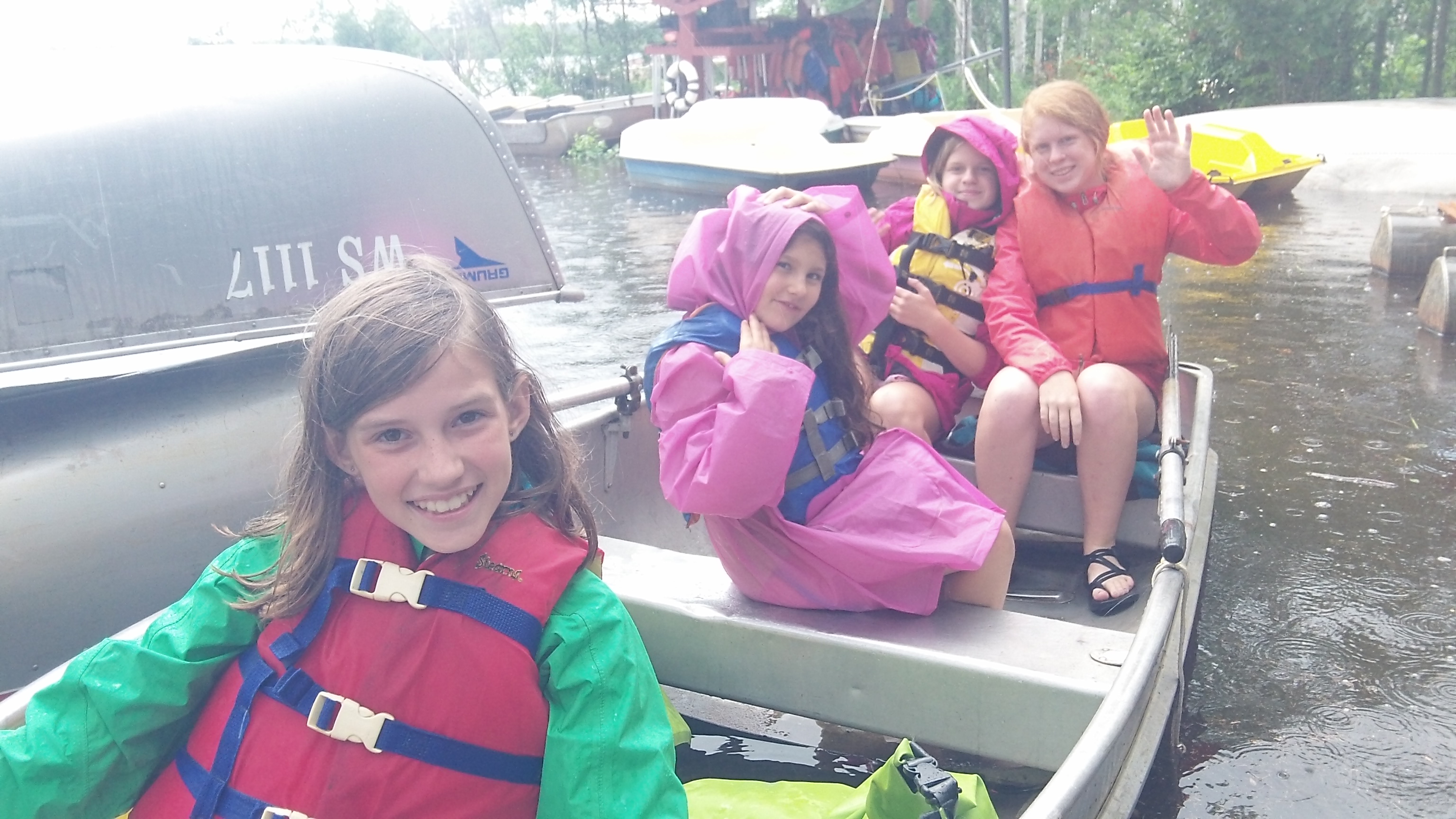 Every summer millions of children go to overnight summer camp. But Why? Oh sure, some parents just need day care. But the vast majority of parents that are thinking about sending their child to overnight summer camp, do not take this responsibility lightly. They do their research by: going to camp fairs, talking to friends, taking camp tours and chatting with references. Why do all this? Because when you select the right Overnight Summer Camp for your child, it will be a life changer and an experience they will want to repeat summer after summer. Maybe thats why children from all around the world come to USA Summer Camps
So how does summer camp change kids lives? Not every camp is the same, so I can only speak about our overnight summer camp. Swift Nature Camp is located in the Northwoods of Wisconsin. We cater to children 6–15, with a leadership program for our 16 & 17 year old campers. Our small camp blends old-fashioned camp activities on land and water, with environmental and nature learning. Plus we have a camp zoo, where children who love animals can even adopt one while they are at camp.
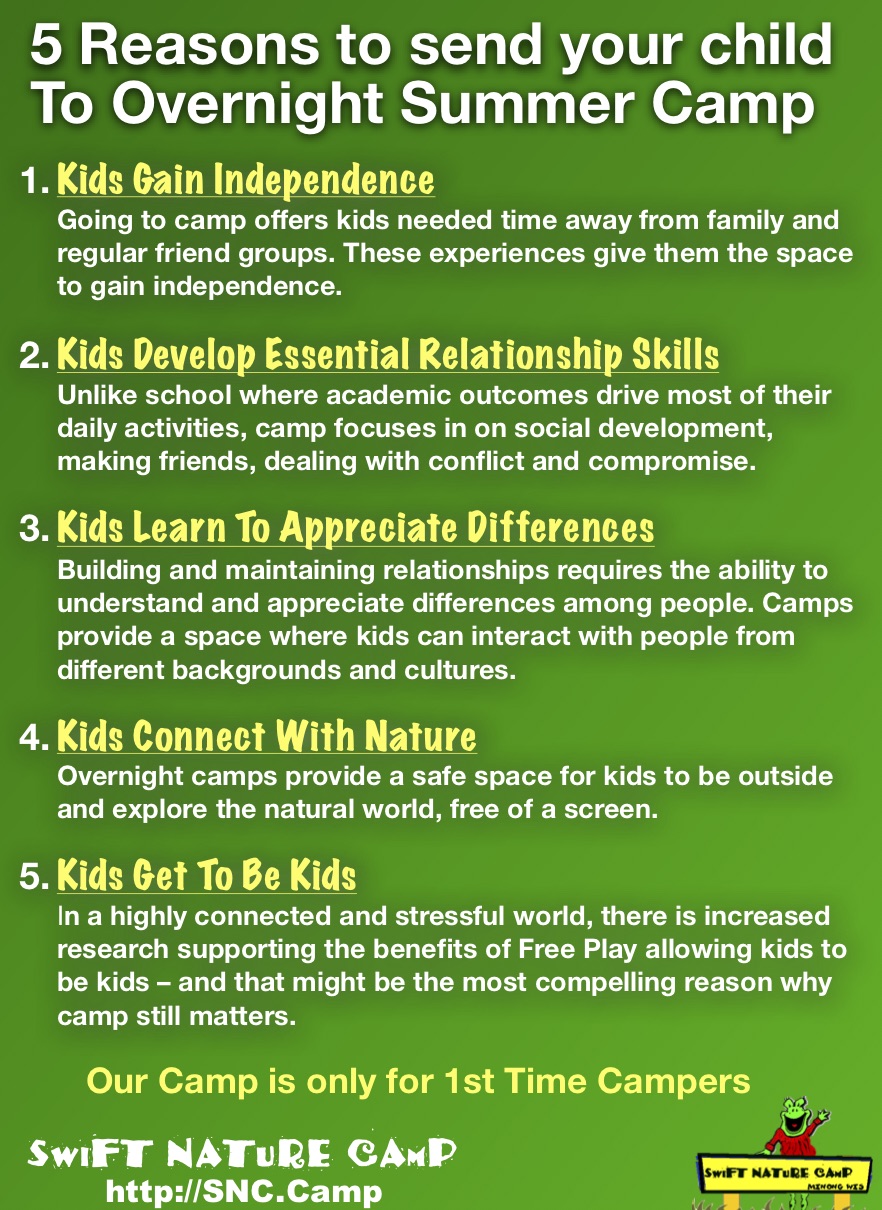
Here are ways that children’s lives are changed because of camp:
1) Great Staff- When you get young people who are dedicated to kids full time, your child feels it. Camp counselors have boundless energy and enthusiasm- something parents often loose as they get older. It’s like having the best big sister or brother in the world who really cares about you. They want you to be your best. So children look up to these counselors and since they are role modeling positive values, your child will pick those up and bring them home.
2) Communal Living- Yes, your child will be living in a cabin with 5–8 other children of their own age, building new friendships and developing strong new social circles. For most children this is a new experience. When you live with others, you have to be a little less worried about yourself and be thinking more about others. That is part of the natural progression of kids from self to others. Camp pushes them a little further along this road.
3) Nature-This day and age we live our lives inside. There is a big beautiful world out there that children should learn about and they should not be afraid of. All of science is saying, humans need to be connected to their environment, enjoy the beauty of the simple things in life. That’s why at SNC, we often take our kids to the lake to quietly enjoy a sunset.
4) Independence- Today we have so many types of parents, and often we see loving parents that hold their children back, not intentionally. But, sometimes they just don’t see that kids need and want to get out on their own, make decisions on their own and try new things. A Nature Camp is a safe place to try things, make mistakes and move on. This is all part of growing up and camp is the safe and supervised place this takes place.
5) Play is an amazing tool. It helps children get exercise, loose weight and feel better. More important, Free Play can help children resolve conflict, problem solve and be creative. Daily, at camp have 1.5 hours dedicated to free play, where campers can do the activities they want to do. This is like the old days, when children could just go outside and play.
One thing we hear from parents every summer is “I wish I would have sent my child to Swift Nature Camp sooner” you see, childhood is a once-off thing. Too soon it’s over, and you can’t reclaim the years, but you can look back on incredible memories. That’s why summer camp is so important — it’s a fun, positive experience where children can simply be children and have the time of their lives. Overnight summer camp is a vital part of a child’s personal growth and development
It’s the small size and attention to detail that makes camp so successful at promote each child’s personal development. Sending your child to Swift Nature Camp is a gift, one your child will cherish for the rest of their life. Maybe that’s why 92% of our campers want to return each summer to this Wisconsin Summer Camp.
 So you have done all your homework, You have been planting the seeds with your new camper. You have talked about camp, done a sleepover and looked at websites. You have even taken an assessment of your child's needs and wants, and you tried to match those with the proper summer camp. For instance our Nature Camp is the best for those kids who still like being outside and off the screen. So now you have picked the Right Camp- the mission meets yours and the dates work. Often, parents think all they have to do is now pay a deposit and they are off to camp. As an Overnight Summer Camp Director, I suggest you scour the website to answer the below questions or email to get the answers, ya might even do that crazy thing and pick up a phone and call. Not all camps are equal. A side note, as a camp director it is some what terrifying to me how few parents these days call to talk to a Camp Director. Most just see a few pretty picture and they are good to go. Not the best decision. Mu goal is not to scare you but, here are things to think about.
-
*What is the camper to counselor ratio for the majority of the day? How many staff total at camp? What are the ages of Counselors?
-
*How do they handle supervision of children, discipline issues? What is the discipline policy? When do they send a camper home?
-
*What age groups will be combined together? Do younger children mixed with older children? How are activities different for different ages?
-
*What is the schedule for the program, what will they be doing each day? What is planned or free choice? How much non-active time?
-
*What are the qualifications of the Counselors? What about training. Do they have First Aid and CPR?
-
*Are staff up-to-date on criminal background checks?
-
*What is the policy for handling injuries and illness? Who is at camp to give care?
-
*Do the campers go swimming or near water? Do campers take swim proficiency tests? Are there a lifeguards on duty?
-
*What insurance does the program carry? Do they have liability insurance?
- ,
- These are all great things to think about. at Swift Nature Camp we have a Summer Camp Parent Answer Page that helps parents make a very informed decision. We believe we want you to have too much information so you KNOW you made the right decision.
 Parents & Campers,
- When selecting a summer camp it is import that you pick the right summer camp for you. Sure all camps have fancy summer camp websites, but often you may have particular questions you you want to ask in person, Summer Camp Opportunity Fairs (Camp Expos) offer just such an chance. Below is a list camp fairs we will be attending in Wisconsin and Illinois. . So f you want to learn more about camp come see us or if you are an alumni please stop by and say "HI". We are always happy to talk about camp.
-
SUMMER CAMP EXPO- SUMMER CAMP FAIR
PLACES TO FIND SWIFT NATURE CAMP THIS SPRING
FEBRUARY 7th,
Summer Recreation Open House, York Community High School, Elmhurst, IL, 6pm to 8pm
- FEBRUARY 13th,
Fox Vally Summer Activities Fair, Wredling Middle School, 1200 Dunham Rd., St. Charles, IL, 6pm to 8pm - FEBRUARY 25th,
CampExpo at Sunset Ridge School 525 Sunset Ridge Northfield Il. 10am to 2pm - FEBRUARY 25th,
Minnesota Parent Camp Fair, Como Zoo & Conservatory, St. Paul, MN, 10am to 2pm (will not attend but will have brochures there) - MARCH 6th,
Stratford Middle School Summer Activities Fair, Stratford Middle School, Bloomingdale, IL, 6pm-8pm - MARCH 9th,
District 181 Summer Camp Expo, Clarendon Hills Prospect School, 100 N. Prospect Ave., Clarendon Hills, IL, 6pm-8:30pm - MARCH 13th,
STAGE 203 Summer Activities Fair, Kennedy Junior High School, Lisle, IL, 6pm to 8pm - MARCH 21st,
Indian Prairie Summer Activities Fair, Still Middles School, 787 Meadowridge Dr., Aurora, IL, 6pm to 8pm


As parents we always want to try raise the best kids and often I wonder cano I raise a child that is successful and caring? The research seems to show they parents need to start by looking at the mixed messages we send.
The Battle Between Success and Compassion By Vicki Zakrzewski
If you were asked to rank in order of importance academic achievement, happiness, and care for others as priorities for our young people today, how would you respond?
If you’re like most parents and teachers in the U.S., you would place the highest importance on care for others—a very worthy choice and one that science suggests can actually increase the other two outcomes.

Stockbyte
Yet, a recent U.S. survey of 10,000 middle and high school students conducted by Harvard’s Making Caring Common Project revealed that students believe their parents and teachers prioritize academic achievement and happiness over caring.
In other words, students are receiving the message from adults that personal success is more important than concern for others. With that being the case, it becomes easier to understand why cheating is rampant among students.
This is a wake-up call for us adults. Even though we may view ourselves as very caring people, and think we’re promoting this value to our young ones, somewhere there’s a disconnect that we need to remedy—and the not-so-easy answer lies within ourselves.
The complexity of care
If getting adults to “walk the talk” of care was as easy as reminding them that they need to do so, then our problem would be solved. But care is very complex, impacted by things such as cultural beliefs and attachment security, and making it a priority in our and our children’s lives sometimes requires us to deeply introspect on how care manifests or not in daily life.
For example, in a game called “Compassion Continuum” designed by compassion-expert Brooke Dodson-Lavelle, adult participants are asked how much compassion they would feel for their child who gave a speech in school and failed. Most people respond that they would feel a lot of compassion. Then they are asked how much compassion they would feel for another child who had given a speech and failed, but who had also bullied the participant’s own child. As you can imagine, the responses are all over the board—a perfect example of how caring for others is not always black and white and perhaps one reason why our youth, who are equipped with hyper-sensitive radar for hypocrisy, are getting mixed messages from adults.
Ultimately, our view of care is wrapped up in who we are—it’s part of our identity. And, according to Harvard professor and adult development expert Robert Kegan, changing part of one’s identity requires transformation at our deepest core. While the process is neither fast nor easy, it can yield great rewards.
Changing our view of care
After decades of research and practice in adult learning, Kegan posits that in order to truly change, we have to become aware of our unconscious emotions, habits, and beliefs that run our lives so that we can instead reflect on these internal constructs and change them if necessary.
But this unearthing process can elicit anxiety. For example, many parents and teachers know something has to change with the staggering pressure our students are under to succeed academically, particularly as this pressure is leading to an increase in mental illness.
Need more ideas on how to cultivate caring children?
Click here for a downloadable, reader-friendly list of research-based suggestions from Harvard's Making Caring Common Project.However, the thought of having to change our beliefs about success fills many of us with anxiety because it would require us to consider our own identity around success. A parent who is concerned about the academic pressure on his or her child may be forced to examine the belief that getting into a top university will lead to a materially successful life. Upon deeper self-examination, the parent may be surprised to find that this belief is supported by other beliefs such as a materially successful life is the only way a child will be secure and happy in this world. And if a child is not secure and happy, then the parent has potentially failed in his or her parental responsibility.
The depth of this kind of reflection may be too threatening for many of us. Thus, we unconsciously manage this anxiety by continuing on with status quo. And, hence, our children might get the message that success is more important to us than care.
So how do we start aligning our priority of care with our actions? The process that Kegan and co-author Lisa Lahey outline in their book Immunity to Change is a multi-step approach, the explanation of which would require more room than I have in this blog. However, I can offer these few suggestions based on their work:
1. Start by reflecting on the care you give and receive in your life—or lack thereof—in order to bring to conscious awareness how much care impacts you. Examine how you care for yourself and how you and your loved ones—including your pets—care for each other. Then expand this view to include the care between you and a stranger on the street, the grocery clerk, and/or a difficult work colleague. Now broaden your view of care to examine care at a societal level, from business practices to childcare options to equity to gender roles to political systems.
Did you find yourself getting emotional at any point in this reflection? For example, did a situation that lacks care make you feel angry or scared or sad? If so, why? Kegan and Lahey state that underlying every challenging situation or behavior is an “emotional ecology” that we must explore in order to understand where our potential limitations lie, and their book outlines a very specific and in-depth process to do so. Only when these limitations that have been driving our actions without us realizing it are brought to conscious awareness can we start to change them.
And once you’ve identified these limiting behaviors, Kegan suggests that instead of trying to defend them, admit them with all “their embarrassing glory”. I would also recommend practicing self-compassion, realizing, as self-compassion expert Kristin Neff posits, that you’re not alone. All of humanity struggles with challenging internal constructs.
2. Ask yourself if there is enough at stake to warrant a change. According to Kegan and Lahey, the process of transformation at this depth can be very challenging, so we have to be sure that we’re willing to try. They have found that people are motivated to change for several reasons, including: if they don’t change, something or someone they love will be harmed; not reaching a goal has become impossible to live with; or there is “deep discrepancy” within themselves.
For instance, a teacher or parent who learns that at the root of a child’s anxiety and panic is the child’s belief that he or she is loved and accepted only when academically successful may be motivated to make some radical changes in his or her own behavior and beliefs.
3. Test out new ways of being. Once you have identified a core limitation, then Kegan and Lahey recommend trying another mode of behavior that acts against this limitation. For example, if you responded with anger to a bullying situation similar to the one described above—anger that was perhaps motivated by your own experience of being bullied—you might try acting compassionately towards the bully and see what happens. If you notice a positive change, then keep doing it.
The reward for all this inner work, according to Kegan and Lahey, is a release from the anxiety caused by the denial of our unconscious emotions, beliefs, and habits. “You [will be able to] scan the world,” write the authors, “for more promising possibilities and bring to your own living a deep restfulness that you may never before have known.”
By examining and shifting our beliefs and practices of care, we may find that our relationships with ourselves, our loved ones, our colleagues, strangers on the street, and perhaps the rest of the world are transformed into something we could never have imagined—and we may become more successful and happier as a result.
Martin Luther King, Jr. once said, “True compassion is more than flinging a coin to a begger; it comes to see that an edifice which produces beggars needs restructuring.” And I would add that part of that restructuring includes ourselves.
They say in America these days our kids are having less opportunities to be challenged in a positive way and therefore having a negative impact on them as adults.

Please read below and see how camp can help supplement your child's personal growth.
Building Resilience in Children
The world can be a frightening place. As a parent, I am constantly aware of choices that I make to minimize my perception of fear and uncertainty. Death, illness,divorce, crime, war, child abductions, tsunamis, and terrorism — both here and abroad — have defined an evolving landscape for raising our families. How do we manage to parent from a place of love and understanding, not fear and paranoia?
It’s not possible to protect our children from the ups and downs of life. Raising resilient children, however, is possible and can provide them with the tools they need to respond to the challenges of adolescence and young adulthood and to navigate successfully in adulthood. Despite our best efforts, we cannot prevent adversity and daily stress; but we can learn to be more resilient by changing how we think about challenges and adversities.
Today’s families, especially our children, are under tremendous stress with the potential to damage both physical health and psychological well-being.
The stress comes from families who are always on the go, who are overscheduled with extracurricular activities, and ever-present peer pressure. In the teen years, the anxiety and pressure are related to getting into “the” college.
In today’s environment, children and teens need to develop strengths, acquire skills to cope, recover from hardships, and be prepared for future challenges. They need to be resilient in order to succeed in life.
That is why Kenneth Ginsburg, M.D., MS Ed, FAAP, a pediatrician specializing in adolescent medicine at The Children’s Hospital of Philadelphia (CHOP), has joined forces with the American Academy of Pediatrics (AAP) to author A Parent’s Guide to Building Resilience in Children and Teens: Giving Your Child Roots and Wings. The new book provides a dynamic resource to help parents and caregivers build resilience in children, teens, and young adults.
Dr. Ginsburg has identified seven “C”s of resilience, recognizing that “resilience isn’t a simple, one-part entity.” Parents can use these guidelines to help their children recognize their abilities and inner resources.
Competence
Competence describes the feeling of knowing that you can handle a situation effectively. We can help the development of competence by:
-
Helping children focus on individual strengths
-
Focusing any identified mistakes on specific incidents
-
Empowering children to make decisions
-
Being careful that your desire to protect your child doesn’t mistakenly send a message that you don’t think he or she is competent to handle things
-
Recognizing the competencies of siblings individually and avoiding comparisons
Confidence
A child’s belief in his own abilities is derived from competence. Build confidence by:
- Focusing on the best in each child so that he or she can see that, as well
- Clearly expressing the best qualities, such as fairness, integrity, persistence, and kindness
- Recognizing when he or she has done well
- Praising honestly about specific achievements; not diffusing praise that may lack authenticity
- Not pushing the child to take on more than he or she can realistically handle
Connection
Developing close ties to family and community creates a solid sense of security that helps lead to strong values and prevents alternative destructive paths to love and attention. You can help your child connect with others by:
- Building a sense of physical safety and emotional security within your home
- Allowing the expression of all emotions, so that kids will feel comfortable reaching out during difficult times
- Addressing conflict openly in the family to resolve problems
- Creating a common area where the family can share time (not necessarily TV time)
- Fostering healthy relationships that will reinforce positive messages
Character
Children need to develop a solid set of morals and values to determine right from wrong and to demonstrate a caring attitude toward others. To strengthen your child’s character, start by:
- Demonstrating how behaviors affect others
- Helping your child recognize himself or herself as a caring person
- Demonstrating the importance of community
- Encouraging the development of spirituality
- Avoiding racist or hateful statements or stereotypes
Contribution
Children need to realize that the world is a better place because they are in it. Understanding the importance of personal contribution can serve as a source of purpose and motivation. Teach your children how to contribute by:
-
Communicating to children that many people in the world do not have what they need
-
Stressing the importance of serving others by modeling generosity
-
Creating opportunities for each child to contribute in some specific way
Coping
Learning to cope effectively with stress will help your child be better prepared to overcome life’s challenges. Positive coping lessons include:
-
Modeling positive coping strategies on a consistent basis
-
Guiding your child to develop positive and effective coping strategies
-
Realizing that telling him or her to stop the negative behavior will not be effective
-
Understanding that many risky behaviors are attempts to alleviate the stress and pain in kids’ daily lives
-
Not condemning your child for negative behaviors and, potentially, increasing his or her sense of shame
Control
Children who realize that they can control the outcomes of their decisions are more likely to realize that they have the ability to bounce back. Your child’s understanding that he or she can make a difference further promotes competence and confidence. You can try to empower your child by:
-
Helping your child to understand that life’s events are not purely random and that most things that happen are the result of another individual’s choices and actions
-
Learning that discipline is about teaching, not punishing or controlling; using discipline to help your child to understand that his actions produce certain consequences
Dr. Ginsburg summarizes what we know for sure about the development of resilience in kids by the following:
-
Children need to know that there is an adult in their life who believes in them and loves them unconditionally.
-
Kids will live “up” or “down” to our expectations.
There is no simple answer to guarantee resilience in every situation. But we can challenge ourselves to help our children develop the ability to negotiate their own challenges and to be more resilient, more capable, and happier.
Overview of Stress
- There will always be stress in our lives.
- Stress is an important tool that can aid in our survival.
- Our body’s reaction to stress is mediated through a complex interplay of sensory input—sights and sounds—as well as the brain and nervous system, hormones, and the body’s cells and organs.
- Emotions play an important role in how we experience stress because the brain is the conductor of this system. The way we think about stress and what we choose to do about it can affect the impact of a stressful event.
This article was featured in Healthy Children Magazine. To view the full issue, click here.





A Wisconsin DNR Property leased by Swift Nature Camp