
Displaying items by tag: Overnight Camp
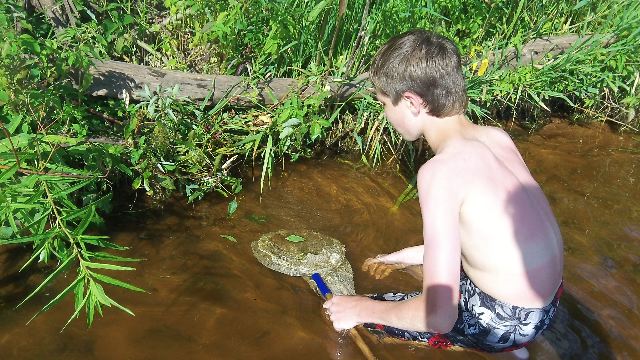 Illinois summer camps that offer animal-related activities provide children with unique opportunities to learn about and connect with the natural world. One such camp is Swift Nature Camp, which offers a variety of animal-focused activities.
Some advantages of attending Swift Nature Camp include:
-
Animal Interaction: The camp offers children the opportunity to interact with animals in a safe and supervised environment. This can help children develop a love for animals and a sense of responsibility towards their care.
-
Hands-on Learning: The camp's activities allow children to learn about the animals through hands-on experiences. They can observe their behavior, feed them, and learn about their habitats and needs.
-
Outdoor Activities: In addition to animal-focused activities, the camp also offers a variety of outdoor activities such as hiking, canoeing, and swimming. This provides children with an opportunity to enjoy the natural world and develop an appreciation for it.
-
Social Skills: Attending a summer camp like Swift Nature Camp allows children to develop social skills by interacting with their peers in a fun and supportive environment.
-
Lifelong Memories: Many children who attend summer camps like Swift Nature Camp create lifelong memories and friendships. These experiences can help shape their interests and passions for years to come.
Overall, attending a summer camp with animals like Swift Nature Camp can be a fun and educational experience for children. It allows them to learn about the natural world, develop social skills, and create lasting memories all in a fun, supportive environment..
Swift Nature Camp's Discovery Camp is a summer program designed for children who are interested in exploring the natural world and learning about animals. Located in Wisconsin, this camp offers a range of outdoor activities and hands-on experiences that allow children to interact with animals in a safe and supervised environment. The Discovery Camp program is open to children between the ages of 6 and 12, and it focuses on teaching them about nature through fun and engaging activities such as hiking, canoeing, swimming, and nature art. Through these activities, children can develop a love for animals and a deeper understanding of the natural world, all while making new friends and creating lasting memories. With experienced counselors and a supportive community, Swift Nature Camp's Discovery Camp is a great way for children to learn, grow, and have fun during the summer months.
Please give us a call at 630-654-8036
Lonnie Lorenz
Swift Nature Camp
SNC.Camp
Wisconsin / Illinois
 Come and see the trees in 2023 at SNC, Their branches stretch up to the sky so free, Their leaves sway in the gentle breeze, As the world around them continues to seize.
In spring, their buds burst forth with life, A vivid array of colors, free from strife, As camp awakens from its winter rest, The trees remind us of nature's best.
In summer, they provide a welcome shade, A cool respite from the heat that pervades, As campers and Staff stroll by, The trees offer solace under the sky.
In fall, their leaves turn brilliant hues, A final burst of beauty before winter ensues, As camp prepares for a new season, The trees remind us of nature's reason.
And in winter, they stand tall and still, A silent reminder of nature's will, As the snow blankets camp around, The trees remain rooted in the ground.
So come and see the trees in 2023 at SNC, Their presence a testament to life's mystery, May we take a moment to pause and reflect, And cherish the trees that we often neglect.
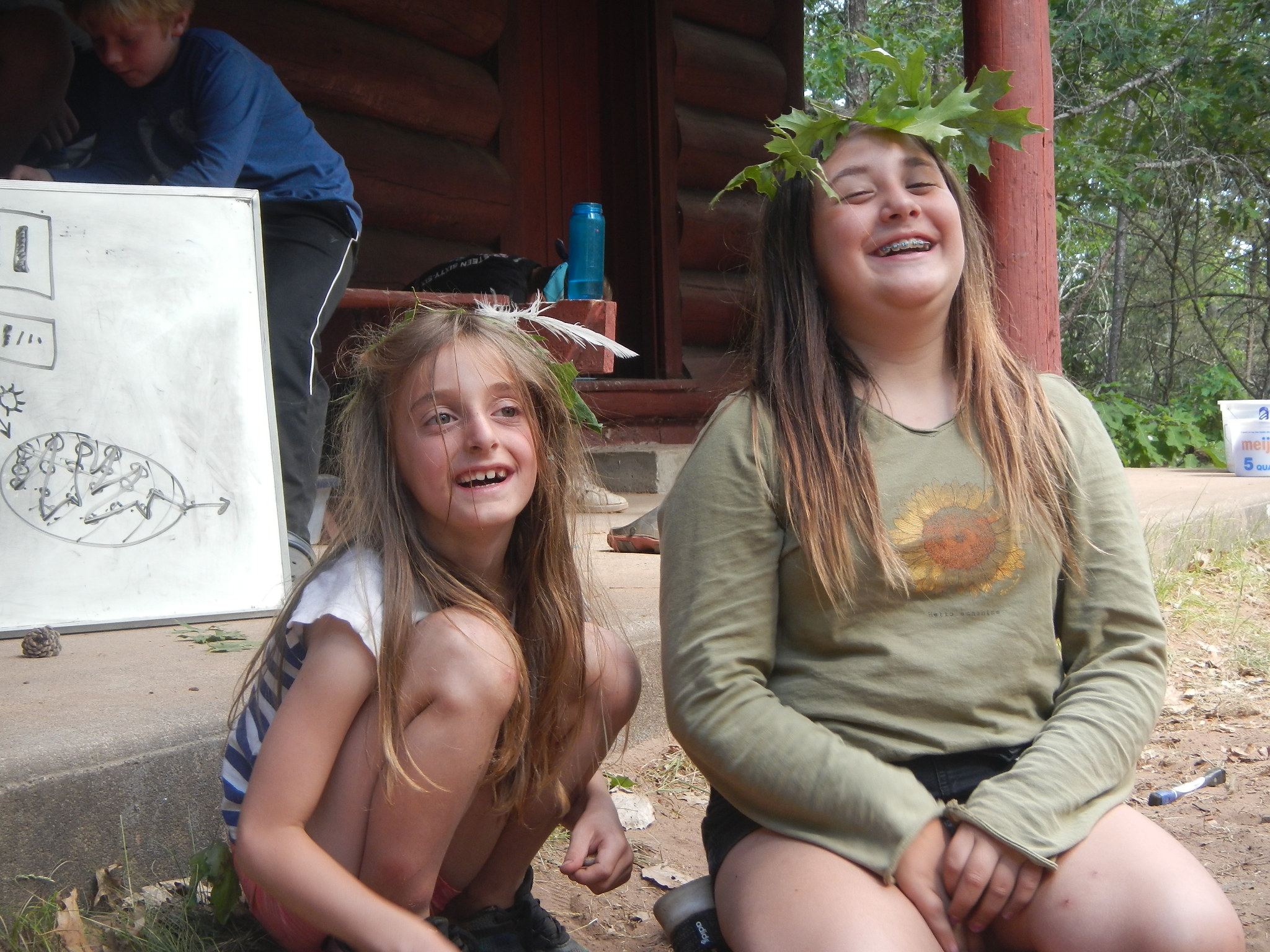
As a summer camp director for over 25 years families often ask why camp has such a positive impact on kids. I usually answer with "Camp Magic". Yet researcher have been researching what children need during their summer of no school and magically Overnight Summer Camp meets all of the requirements. Below is their article published on the Society of Behavioral Medicine.
Lazy Days of Summer: How to keep children active all year long
Dori Pekmezi, PhD; University of Alabama at Birmingham
Linda Trinh, PhD; University of Toronto
Diane Ehlers, PhD; University of Nebraska Medical Center
Jennette Moreno, PhD; Baylor College of Medicine
It is known that children are less active over summer break. A recent study among children 6 to 9 years of age showed that physical activity dropped by 53% during the summer months. Moreover, time spent in sedentary activities (e.g., screen time) increases. According to the national survey data, children watch more television (+18+ minutes/day) over summer break than during the school year.
There are many possible reasons for these seasonal differences in physical activity. School days typically involve regular physical activity sessions (e.g., recess, PE class) and limited screen time, which may have a protective effect on children’s health behaviors. The structured days hypothesis suggests that disruptions in such routines are responsible for lower physical activity levels over the summer. However, parents also play a role. Past research found that third and fourth grade parents restricted screen time during the school year to encourage homework completion and then relaxed these rules once school was out of session.
Declines in physical activity over the summer can have adverse effects on children’s health (e.g., weight gain). Numerous studies have shown that body mass index increases more in the summer than in other seasons. Excess weight gain can lead to obesity and poorer metabolic, cardiovascular, respiratory, and mental health for children. Overweight/obese, low income, Black, and Hispanic children are at increased risk for summer surges in body mass index. Thus, physical activity in the summer months is critical for children’s health.
What the Experts Say
Dr. Jennette Moreno from Baylor College of Medicine is an SBM member and content expert with the following advice.
What tips do you have for parents to keep kids active during summer?
Tip 1: Infuse structure into your child’s summer. During the school year, children have to get up and get going, but this may not be the case during the summer. Set up a routine that gets them moving. This may involve going to summer camp, taking walks, going to swim lessons, or just having a standing playdate with friends. Also going to bed at a similar time during the summer as during the school year will help your child to be rested and active the next day.
Tip 2: Be prepared for the weather. Heat, humidity, and inclement weather are common barriers to outdoor physical activity. Take advantage of mornings before it really heats up. Water activities can help beat the heat, but also have indoor physical activity options ready to go, like online yoga and PE videos geared towards kids. My kids love dance parties, playing twister, turning board games into active play by running after the dice and adding jumping jacks in between turns. On bad weather days, check out local climbing gyms, indoor playgrounds, or bowling alleys.
Tip 3: Place limits on screen time. If given the choice, many kids will pick screen time over going outside to play. However, if screen time is limited, they may find something more active to do. One idea is to set your devices to not be accessible during school hours (even during summer) and only allow a pre-specified number of hours of screen time. This is how my kids got into designing obstacle courses outside.
Tip 4: Find a buddy. Kids are more likely to be active when other kids are around. Scheduling playdates, getting involved in a local kids group like scouts or a sports team are great ways to help kids maintain social relationships and encourage active play during summer.
How can schools/communities help kids stay active over the summer?
What about public health practitioners and policy makers-how can they help?
Teachers often ask children to read, journal, and practice math facts during summer. I would love to see schools design physical activity curriculars for kids to do at home during summer and keep the playgrounds open and accessible. Other important ways to help promote physical activity among children during summer is to make sure all families have access to high-quality affordable childcare during summer. As well as encouraging walkable neighborhoods in which children regardless of socioeconomic status have access to safe parks, playgrounds, splash pads, and public swimming pools within walking distance of their homes.
Recently, I read the below article about keeping our children safe during a pandemic in the summer of 2021. I whole hardily agree in what was said and yet I found something missing. Last summer we ran summer camp without it. This year, science has brought testing, a game changer for overnight summer camps . Summer Camp will be more safe and manageable when overnight summer camps use preamp and during camp testing. Our “safe bubble” will more quickly be available getting us into the fun of Summer camp, COVID FREE. At SNC Policy will develop as the summer nears. But here is what we did in 2020, Camp COVID Policy
Summer Camps 2021: Health & Safety First
As school starts to wind down and vaccine rates increase, East End families are cautiously looking toward a summer of fun. Although we still don’t know what the summer will bring in terms of infection rates or public health policies, here are some tips to make your summer as safe as possible…
MASKS
As we’ve learned, COVID is a virus which attacks the respiratory tract and is spread by droplets (a small amount of liquid produced by exhaling). These tiny droplets can become aerosolized and fly through the air, where they can be inhaled by others. The best way to protect yourself and those around you is to be vigilant about wearing masks…even if someone has been vaccinated!
The best thing to do is to wear a cloth mask (either purchased or homemade, a good chance for some camp-inspired creativity) or a disposable mask (but save the N95 masks for your healthcare providers who have been properly fitted for them). Avoid masks with ventilation valves, as this can increase the spread of disease. The only way that a mask can protect anyone is to wear it correctly…this means masks should cover your mouth and nose at all times and fit snugly.
Try not to touch your mask while wearing it, and wash your hands if you do! When you remove your mask, remove it by the ear loops or tie—don’t touch the front of the mask (where the germs are) or your face. Wash or sanitize your hands after taking off your mask, and make sure to launder your mask regularly.
HAND WASHING—NOT GLOVES
The Centers for Disease Control (CDC) recommends that gloves only be used for those caring for or cleaning up after those who are sick. It is not necessary (and may be more dangerous) for your kids to use gloves during summer fun, especially during camp activities, including eating and drinking. If your child is wearing gloves and touches their face, it may make things worse.
Instead of gloves, remind them to wash or sanitize their hands frequently (with a product that is at least 60% alcohol). Make sure that their camp supplies include a liberal supply of hand sanitizer. You can make it fun by picking products of fun scents and colors. Washing your hands is one of the best ways to not only prevent COVID, but a whole host of other illnesses.
SOCIAL DISTANCING
This is still the most important way to keep yourself and your kids safe! Make sure that your kids’ camps are taking all reasonable precautions to limit large gatherings and plan more outdoor fun. When not at camp, continue to take precautions. When opting for outdoor dining venues, make sure the venue has spread-out tables and the staff are wearing masks. Be mindful of wearing masks in stores, following arrows in store aisles and not crowding cash registers. If you are venturing out to beaches or parks, choose times that are less busy and keep your distance from others.
Just because COVID is on everyone’s mind, there are also some non-COVID things to consider for the summer…
ALLERGIES
According to the CDC, food allergies are on the rise. About 6-8% of children have at least one food allergy and these can be serious. Symptoms of food allergies can include hives, itching, rashes, coughing, vomiting, lip swelling and difficulty breathing. In short, food allergies can be life threatening for some children.
If your child has a food allergy, make sure the camp staff understands exactly what triggers their symptoms, what their symptoms are and how to manage an emergency. Equip your camper with the medications recommended by your doctor, including an epi-pen (an injectable rescue medication for anaphylactic shock) if necessary. Remind your child to ask questions when offered new foods or treats, and be prepared to send special snacks for your day camper if the camp can’t accommodate special requests. If one of your child’s co-campers has an allergy, do your best to respect the rules and don’t send food that could be dangerous.
LYME DISEASE
Long Island (and Wisconsin) is notorious for deer ticks that carry Borrelia burgdorferi, the most common bacteria that cause Lyme disease, a tick-borne illness that can cause rash, joint pain, headaches, fever and swollen lymph nodes, among other symptoms. If untreated, Lyme disease can also cause neurologic symptoms and cardiac damage. It’s important to minimize your child’s risk for tick bites and to identify early signs of possible Lyme disease, which can be successfully treated with antibiotics.
Whenever possible make sure your child wears a hat, long sleeves and long pants in heavily wooded areas. Encourage them to tuck their pants into their socks to further minimize exposed skin. Make sure your child is using insect repellent, with 20% DEET concentration, but avoid their hands, mouth and eyes. When hiking through brush and woods, encourage your children to stay on well-marked trails, which tend to have fewer heavily wooded areas.
Once your child comes home after a long day, teach him or her to check themselves for ticks (or make sure their counselor at sleepaway camp encourages this). In general, the shorter the time a tick is on your body, the less likely it is to cause disease. A deer tick is as small as the period on the end of a sentence and may be hard to see, but make sure everyone is looking.
Finding a deer tick is not an automatic reason to visit the infirmary or your pediatrician, but it is important to stay vigilant. Symptoms of Lyme disease can appear up to a month after a tick bite. Remind your children to alert camp staff or you if they have fevers, feel achy or sick, have “swollen glands,” or a new rash. The classic rash associated with Lyme disease is a bullseye, also known as erythema migrans. Any of these findings should send your child to the camp infirmary or their home pediatrician.
SUNBLOCK
Camp is at its best and most fun when the sun is shining, but it’s crucial to protect your children from the risks it can pose. Remember, having five prior sunburns significantly increases your risk for melanoma (the deadliest form of skin cancer) later in life.
The sun is at its peak intensity from 10 a.m. to 4 p.m., which is usually prime time at camp. Encourage your children to wear wide-brimmed hats in the sun, as well as sunglasses with ultraviolet (UV) protection. It’s a chance for them to make a fashion statement, as well as a positive health choice!
Sunscreen only works when it’s being used in the right amounts and at the right times. Start with an SPF of at least 15 and cover all areas of the body that aren’t covered by clothing. It’s important to reapply sunscreen frequently—every two hours, especially if your child is swimming or sweating a lot in the heat. Even waterproof sunscreen must be reapplied. According to the American Academy of Pediatrics, a young adult needs about one ounce of sunscreen per application.
***
Although a few things are still unclear about this summer, by following these commonsense tips, we can make summer 2021 on the East End safe and fun for everyone!
Dr. Rina Meyer is a board-certified pediatric hematologist-oncologist in practice at Stony Brook Children’s. She is an assistant professor of clinical pediatrics at Renaissance School of Medicine at Stony Brook University. Her views are her own and do not necessarily represent the views of Stony Brook University or Stony Brook Children’s Hospital.
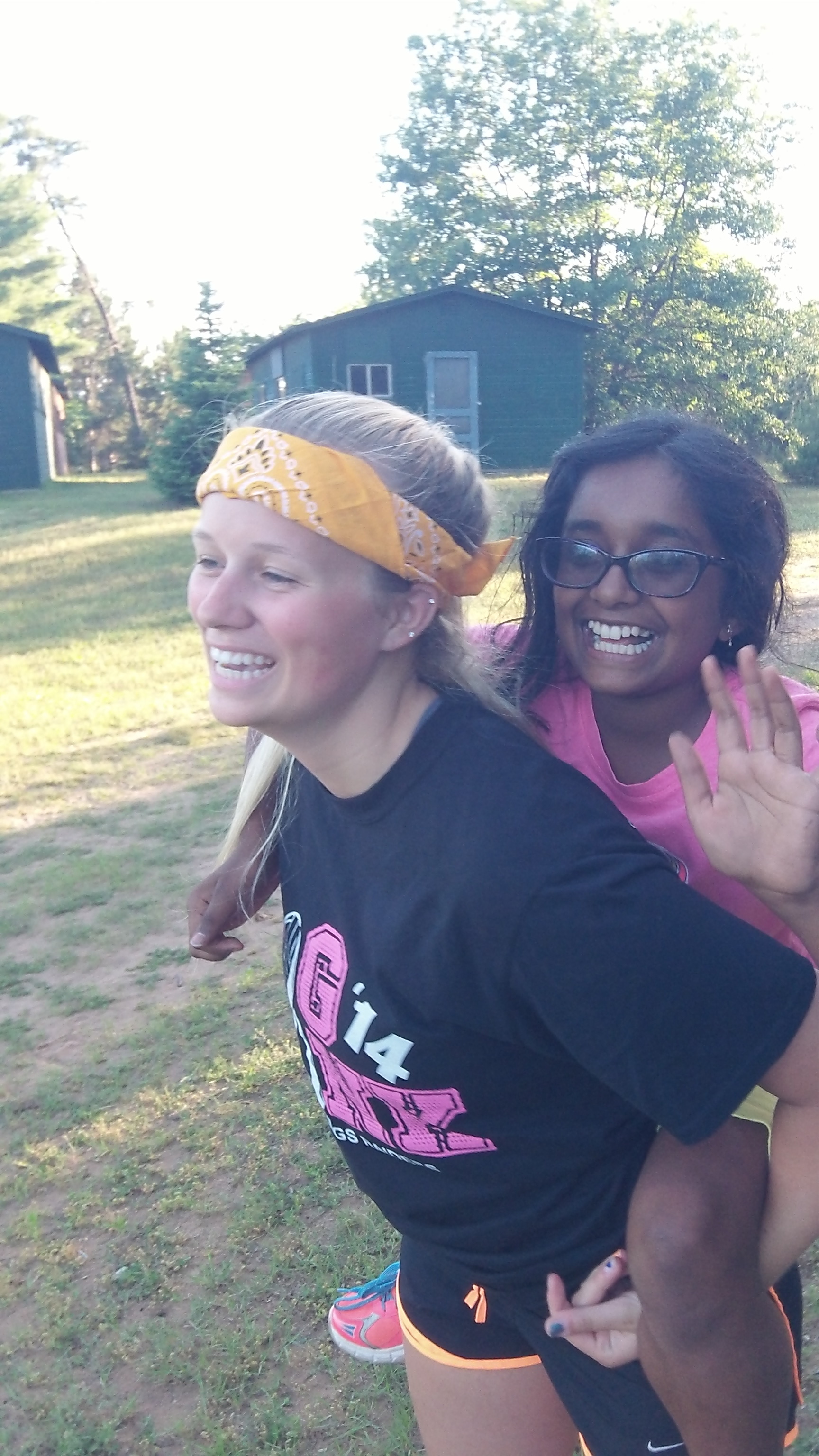 As a camp director in the camping industry for nearly 1/2 of my life I constantly ask my self what are the positive benefits we provide to children. Oh sure, we play out side and are away from technology and that is all good but thier must be more. At Swift Nature Camp we focus on nature and science studies so I have always believed that when children come together with a common interest like animals they build greater bonds. Kinda like a sports team for those kids who are not sportsy. A few years back I had the pleasure to meet Niambi and hear about the specail work she was doing at her summer camp. It was at that point that it became clear that all camps help build acceptance of others and a closeness between cultures. Below is a recent article she wrote concerning the impact summer camp can have on all of society.
Fear Interrupted: Reframing Cross-Cultural Narratives at Camp
Niambi Jaha-Echols. January 2020
Several years ago, when I directed my camp program specifically for African- American teen girls (Camp Butterfly), there were many memorable moments.
But one in particular has been etched in the recesses of my mind since the day it occurred. The event happened during one of our summer sessions; it involved a young 13-year-old girl named “Lea.”
During the day, Lea got along with all the other girls, was outgoing, and seemed pretty typical on the surface. But every night she would wreak havoc in the cabin. She picked fights with the other girls, was disrespectful to her counselors, and refused to go to bed. At first glance, it appeared that she suffered from some nocturnal Dr. Jekyll and Mr. Hyde syndrome. As we gained her trust, we were able to uncover the truth. Lea was afraid to go to sleep because nighttime had proven to be the most unsafe time for her. She had been in a foster home where her bed was positioned right next to the bedroom door. This made it easy for her older foster brother to silently enter the room at night, undetected by her sleeping younger sister. He would kneel by the side of her bed and sexually violate her. We learned that this had been a nightly ritual for almost three months when she was 11 years old until she and her sister were reassigned to a different foster home due to other circumstances. She had never shared the truth of her horrific past and wasn’t even consciously aware of its effects on her nighttime behavior. At camp, her assigned bed was close to a door. She complied during the day but was terrified at night. She picked arguments with the other girls to keep the lights on.
Fortunately, she had a close-knit group of girls and counselors in her cabin. Lea was finally able to share the stories of her past, and, as a group, they focused not on her behavior but on what was driving it. Because she was in a cabin (and camp) with other girls who looked like her, her nightly terror and verbal assaults on the other girls and staff were not deemed to be racially motivated. But I have to be honest, I often wonder if she had been in a cabin where she was the only black girl, would her behavior have been associated with the color of her skin?
I have consulted with camps which, in their efforts to become more diverse, recruit black youth and counselors, dispersing them among different groups within the campus to diversify the camp experience. When incidents or misunderstandings occur, it is effortless to hit our internal default buttons and view them through a black-and-white lens. For many white youths (and counselors), camp may be the first time they have been in a social/ work setting with blacks and vice versa. If Lea had been in a cabin with primarily white girls, and potentially the only person of color, I can only imagine the stories that might have been created around the incident. Given past societal experiences, Lea might have been sent home for being a “disruptive black girl” if she didn’t have staff available with whom she felt safe to explore the truth and who could see beyond the color of her skin. Her loud, aggressive behavior at night could have been deemed “typical” in the minds of counselors and campers who had no prior social connections with black people outside of camp. The unconscious lens of prejudice and implicit bias could have become a considerable barrier to complete acceptance, empathy, and compassion for Lea.
With all the injustice and racially motivated discord that continues to happen in the world, every story we hear, witness, participate in, or create, we shape through our own pain and projection — or through our real power and sense of possibility. Camp creates a beautiful refuge from the distractions of the outside world and has the potential to reconnect us with our inner worlds through nature. The challenge is we bring our stories with us. We carry them in our hands, in our minds, in our feet, and in our hearts. Like tiny fibers, each coded piece of data is like a letter; together they form words and sentences about who we are. Those sentences are then strung together to form paragraphs and then whole stories of who we are — or more accurately — who we think we are (and who we think others are as a result). Sometimes those stories play over and over in our heads like song lyrics. And I suppose, when we feel safe, we speak our stories out loud so that we can sort them all out — and then be open to really hearing others’ stories.
How can we short-circuit our thoughts and bypass the stories we carry about others that are based on fears and often lead to generalizations about entire cultural groups?
- Make sure your social circles outside of camp include people from diverse cultures and backgrounds. We are less likely to see the behavior and actions of one individual as a representation of an entire group if we have formed meaningful relationships with people from a variety of ethnic and cultural groups outside of camp. Without those meaningful relationships, it is easy to unconsciously fall prey to seeing them through the lens of stereotypical assumptions rather than their true personalities.
- Be intentional. Racism is real. We have all been affected by its influence. It is embedded in our psyches, whether we are conscious of it or not. Color is the first thing we see, and some never get past it in creating meaningful relationships. However, we can’t act as if those cultural markers don’t exist. We must see color and then intentionally cultivate relationships that move beyond it. When we do, we can collectively experience aspects of our humanity that extend far beyond our ethnic groupings and can bind us together heart and soul. When we see each other only through the lens of our external colors and cultural representations, we miss out on opportunities for more in-depth understanding, compassion, and empathy for one another.
- Invest in diversity, equity, and heart-centered inclusion work — both at camp and beyond. Racism poses a continual assault on our senses. It is designed to divide us, and we all carry unconscious bias, blind spots, and pain triggers. It is our job to heal those ancestral footprints that are deep inside of us. We can’t transform what we are unwilling to see and feel. So we must look honestly at our biases and prejudices. They can be invisible walls that prevent our campers and counselors from showing their authentic selves. Or they can become bridges that encourage their authentic selves to be on full display.
- Be vulnerable and brave. If you find yourself in a situation where a counselor or camper is from a different culture or ethnicity than you and their default setting is stuck on some painful memory, trauma, sadness, or fear — causing destructive behavior — what do you do? Use your camp wisdom. Don’t allow their current attitude to become a culturally stereotyping story in your mind. Face it with compassion. See the humanity in the individual. Whether you are able to figure out what is causing the underlying pain or not, listen, empathize, and perhaps offer a different perspective. You likely will build bridges, create smiles, and lift spirits. In my experience, each time I open my heart and soul to someone who doesn’t mimic my perspective, my heart expands.
Lea doesn’t represent every black girl’s experience in our society. Unfortunately, sexual assault is something experienced by many young people across cultures. It doesn’t by any means define the person, but it is part of far too many of their stories. When their behavior isn’t perfect, it is easy to view others through the lens of our implicit biases. When we become aware of our own stories and triggers, we can interrupt the patterns of separation and fear. As we bind ourselves together heart to heart, we create an opportunity to reframe the stories we tell ourselves about different cultural groups. We then see and experience our humanity together.
It is when we can disrupt our patterns of thinking and disassemble the stories within us that camp actualizes the collective vision of many: to be a safe place to enrich the lives of children and adults. But we can’t get there if we are too afraid to tell each other the truth and see each person as an individual with a rich culture, and not a representative of their entire cultural group.
Camp has an opportunity to assist the world in writing a new narrative. The only way for us to truly break down our cultural barriers is for us to be in relationship with each other — even when doing so is complicated.
Cultural aha moments at camp often live beyond the summer. While the shine of overcoming fear and bias experienced at camp may be tested when a camper or counselor is back in the real world, they will remember their camp stories — where they felt loved, accepted, and respected. Those stories of your compassion will feed the flames of change. When people from different cultures interact, we can always learn something valuable. We see that we are connected, that our fates are bound together. We are all part of one tribe. The Human Tribe. Together, let’s interrupt the fear and create some new stories across cultural lines.

Has America Fallen? I believe that we can all agree that in the past 3 years or so, our society has become less civil. We use more profanity in public. We are more polarised, it's We VS Them. Life has become a Win / Loose debate, never a Win / Win scenario. It seems like the fall has started. Yet, recently Senator Susan Collins has suggested a Summer Camp staple to help solve the world's ills. Yes, it is the talking stick. A simple concept, when you hold the stick you talk and others listen. Yes, listen - something America is short on these days. Sure, you can call it childish or not needed. But if we look at what Summer Camp teaches our children to become better adult, it is something all parents strive for and it all starts with a talking stick.
Here are just a few of the positive atributes taught at an overnight summer camp:
Affirmation: Sometimes one simple word of affirmation can change an entire life. Recognition from outside can turn into recognition from the inside, also known as confidence.
Art: Everyone who wants to create… can. The world just needs more people who want to, and a child who is free from the pressure of competitive achievement is free to be creative.
Challenge: Encourage a child to dream big dreams. In turn, they will accomplish more than they thought possible… and probably even more than you thought possible.
Compassion/Justice: Life isn’t fair. It never will be – there are just too many variables. But when a wrong has been committed or a playing field can be leveled, we want our children to be active in helping to level it.
Contentment: The need for more material things can be contagious. Therefore, one of the greatest gifts we can give children is a genuinely content appreciation for what they have… leaving them to find out who they are.
Curiosity: Children need a safe place outside the home to ask questions about who, what, where, how, why, and why not. “Stop asking so many questions” are words that need never be heard.
Determination: One of the greatest determining factors of success is the exercise of will. Children flourish when they are given independent opportunities to learn how to find the source of determination within themselves and exercise that determination.
Discipline: Discipline is really a form of concentration learned from the ground up, in arenas that include appropriate behaviors, how to get along with others, how to get results, and how to achieve dreams. Properly encouraged, self discipline can come to be developed into a self sustaining habit.
Encouragement: Words are powerful. They can create or they can destroy. The simple words that a counselor or mentor might choose to speak, can offer encouragement and create positive thoughts for a child to build from.
Finding Beauty: Beauty surrounds us. A natural environment can inspire our children find beauty in everything they see and in everyone they meet there.
Generosity: The experience of generosity is a great way for a child to learn it. Generosity is a consistent quality of heart regardless of whether the medium that reflects it is time, energy or material things.
Honesty/Integrity: Children who learn the value and importance of honesty at a young age have a far greater opportunity to become honest adults. And honest adults who deal truthfully with others tend to feel better about themselves, enjoy their lives more, and sleep better at night.
Hope: Hope means knowing that things will get better and improve and believing it. Hope is the source of strength, endurance, and resolve. And in the desperately difficult times of life, it calls us to press onward.
Imagination: If we’ve learned anything in recent years, it’s that life is changing faster and faster with every passing day. The world of tomorrow will look nothing like the world today. And the people with imagination are the ones not just living it, they are creating it.
Intentionality: This word means the habit of pausing to find the intent behind each of the ongoing choices that comprise our lives. It is the moment of reflection toward one’s own source: slow down, consider who you are, your environment, where you are going and how to get there.
Lifelong Learning: A passion for learning is different from just studying to earn a grade or please teachers. It begins in the home and school but can be splendidly expanded at summer camp. A camper has fun being safely exposed, asking questions, analyzing the answers that expose more and having more fun doing it all again. In other words, learn to love learning itself.
Meals Together: Meals together provide an unparalleled opportunity for relationships to grow, the likes of which can not be found anywhere else.
Nature: Children who learn to appreciate the world around them take care of the world around them.
Opportunity: Kids need opportunities to experience new things so they can find out what they enjoy and what they are good at.
Optimism: Pessimists don’t change the world. Optimists do.
Pride: Celebrate the little things in life. After all, it is the little accomplishments in life that become the big accomplishments. Pride in the process is as important as pride in the results.
Room to make mistakes: Kids are kids. That’s what makes them so much fun… and so desperately in need of our patience. We need to give them room to experiment, explore, and make mistakes early, when consequences are so much less severe.
Self-Esteem: People who learn to value themselves are more likely to have self-confidence, self-esteem, and self-worth. As a result, they are more likely to become adults who respect their own values and stick to them… even when no one else does.
Sense of Humor: We need to provoke laughter with children and laugh with them everyday… for our sake and theirs.
Spirituality: Faith elevates our view of the universe, our world, and our lives. We would be wise to instill into our kids that they are more than just flesh and blood taking up space. They are also made of mind, heart, soul, and will. And decisions in their life should be based on more than just what everyone else with flesh and blood is doing.
Stability: A stable environment becomes the foundation on which children build the rest of their lives. Just as they need to know their place in the family, children need an opportunity to learn how to make their place amongst their peers. Children benefit from having a safe place to learn how stability is made and maintained outside the home.
Time: Time is the only real currency.Children can learn to believe to respect the value of time long before they come to realize how quickly it can pass.
Undivided Attention: There is no substitute for undivided attention, whether it comes from a parent, a teacher, a mentor, or a camp counselor.
Uniqueness: What makes us different is what makes us special. Uniqueness should not be hidden. It should be proudly displayed for the world to see, appreciate, and enjoy.
A Welcoming Place: To know that you are always welcome in a place is among the sweetest and most life-giving assurances in the world.
Along with lifelong friendships, the recognition and development of these attributes is the lasting gift of a child’s experience at summer camp. A summer at camp is the most fun possible way a child gets to experience what it is to be human.
Summer camp is usually thought of in terms of all the traditional activities and facilities that come to our mind, and those elements are indeed part of what makes the experience memorable. But the true essence of the experience of summer camp is human connection. The attributes in this article are qualities that are rediscovered and expanded by interaction with counselors, staff and other campers in a natural setting. The best summer camps are carefully staffed and creatively programmed by directors with this concept in mind. As one director put it, “Our hope is to give the world better people one camper at a time.” Learn more about Swift Nature Camp at http://swiftnaturecamp.com
It's REUNION TIME 2017
We hope you can come join all the fun at our Swimming Party Reunion. Don't forget your suit!
This is a wonderful time to see camp friends visit with camp counselors and see the SNC Yearbook Video for the very 1st Time.
Hope you ca make it. No reservation neccessary.
Where: Oak Brook Park District (1450 Forest Gate, Oak Brook, Il 60523)
When: January 8th
Time: 1-3:30pm
Please bring a friend so they can see what the SNC excitment is all about.
Plus we will have a special gift for all that come.
Wisconsin! When you hear that state mentioned, I'm sure you imagine cows, Harley Davidson motorcycles and the beautiful capitol of Madison. Yet, north of all that is the Northwoods of Wisconsin. Filled with all its natural beauty. In the sky you can see eagles all around swooping down to catch a fish in a nearby lake or stream. If your quiet you might just hear a loon or a wolf in the background. This is what America looked like 100 years ago. Until you experience the simple beauty, you can’t begin to imagine what you will find there.
Children thrive in Wisconsin Summer Camps.Camp offers your child a chance to...
experience nature unlike any other place in the Midwest. At Swift Nature Camp your child gets the opportunity to play, make friend sand learn new skills, all this in the warm sun of the wonderful northwoods of Wisconsin.
Your child will have an unparalleled experience Camp Nature Swift in Wisconsin. This ACA accredited camp has been teaching lucky children how to have a great summer for over 40 years. Dedicated to the spirit of Ernie Swift the camps goal is to enjoy a traditional summer camp while encouraging children to respect nature and to understand it in a more profound way, Children learn why and how to become good stewards of the environment. It is through direct experience and hands on activities that we inspire kids to be environmentally conscious when they return home. This Kids summer camp is so much more, with their dedication to the environment. It is fun with a purpose.
Your child will have an unparalleled experience Camp Nature Swift in Wisconsin. This ACA accredited camp has been teaching lucky children how to have a great summer for over 40 years. Dedicated to the spirit of Ernie Swift the camps goal is to enjoy a traditional summer camp while encouraging children to respect nature and to understand it in a more profound way, Children learn why and how to become good stewards of the environment. It is through direct experience and hands on activities that we inspire kids to be environmentally conscious when they return home. This Kids summer camp is so much more, with their dedication to the environment. It is fun with a purpose.
A Perfect Summer Camps.
The children have such a diverse selection of activities at this Wisconsin summer camp that they can barely fit it all in during their stay! From horseback riding and swimming to archery and craft making the time is action packed with fun filled adventure that your child won’t stop talking about. It will be the best summer camp experience for your child. Camp Nature Swift is no exception and even has a special program for those first time campers. Swift Camp is dedicated to the spirit of Naturalist Ernie Swift. The camps goal is to provide a traditional summer camp while encouraging children to respect nature and to understand it in a more profound way, This ACA accredited camp has been helping children have a great summer for over 40 years.
Our Discovery Program is dedicated to those children going to camp for the first time. This special session is unlike any other overnight camp because it is designed to give additional attention to those children a little reluctant to leave home for their first summer camp experience. Regardless if your child is a first time campers or is experienced at overnight backpacking and canoeing trips your child can attend this camp.
To learn more about picking the best summer camp for your child visit SUMMER CAMP.
We All know how wonderful summer camp is. But have you ever thought about what Swift Nature Camp looks like in February? A few days ago we were at a MN summer camp show and after that made our way up to camp. It was great....
Be sure to see the Movies to see Super Tom. You might recall his back had been hurting last summer after his surgery. Well, Im happy to report that he seems finally to be on the mend. He has not been to his winter job of school custodian but will be ready for camp. YEA!

As you know the Midwest has been very dry this year with almost no snow. When we first arrived it seemed more like April with many bare spots around the bottoms of the trees. But, snow was covering most of the land and the lake. Giving us a chance to play.
One day we walked out to Picnic Island just to see what was going on. It is a different place in the winter with no low plants so you can see almost across the island. We particularly wanted to go look at the Eagles nest. It seems that the winds from one of the storms destroyed the nest. However, we still saw eagles flying around so they are still nearby but we did not see where their new nest might be.
As you can see from the movie I tried a new sport. I got out the water skis and put them on over my socks...it was very tight and then I hooked up to Super Toms 4 wheeler and off I went for a little skiing on the frozen lake. Look at my Hitch Hiker! It was much harder to turn than when you are in the water. Yet, it was fun to try something new. Much of the time we were in sleds being pulled. We tipped so many times yet it was very fun and seemed like winter even though it was near 40 degrees.
One of the most exciting time we had was when we woke up one morning and looked out the window to see two dog like creatures run from Picnic Island across to Sawtooth Isle. They looked like Wolves to me. Later that day we went for a hike to see if we could find the tracks and we did. That was so cool.
After a few days we left and that very night, the snows came and came and came. Tom reported that Swift Nature Camp was covered with over 15 inches of snow. Sadly we missed the real winter that finally came to camp. If you are ever up in the Northwoods in winter be sure to stop by camp and take a look, it is beautiful but kind of depressing with out all he campers there having fun.
See Ya next Summer
Lonnie, Jeff & Forrest





A Wisconsin DNR Property leased by Swift Nature Camp